Diseases
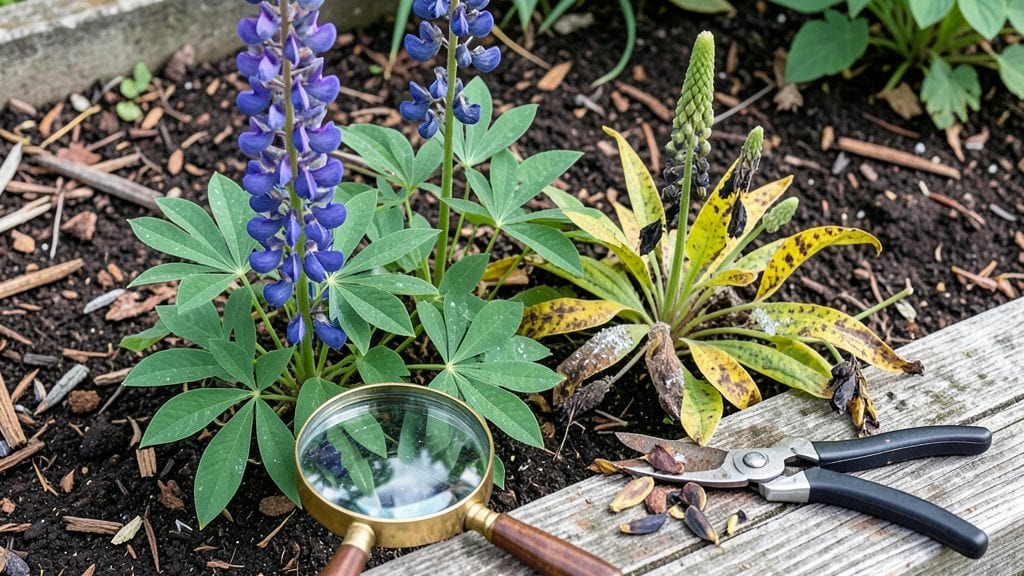
Lupine plant diseases strike fast when you least expect it—spotting those first gray spots or fuzzy patches can turn a thriving plant into a sad shadow in days. 🌱 I’ve seen powdery mildew turn lupine leaves into powdery white blankets overnight, and rust fungus leave behind orange splotches that spread like wildfire.
The key to saving your plants isn’t waiting for symptoms to worsen; it’s catching them early when treatment still works.
Most lupine diseases start with too much moisture or poor air circulation—common mistakes even experienced gardeners make. My lupines thrived until I packed them too closely, and suddenly, fungal spores had a buffet. The good news?
Prevention is easier than you think: space plants properly, water at the base (never overhead), and avoid mulching too thickly. When issues pop up, organic sprays like neem oil or baking soda mix can stop them in their tracks.
You’ll recognize the most common problems by their telltale signs: powdery mildew looks like dust, rust fungus has orange pustules, and bacterial spots show up as water-soaked marks. Once you spot these, act within 24-48 hours—prune infected leaves, treat with fungicide, and keep the area dry.
With quick action, your lupines can bounce back stronger than ever.
This guide cuts through the guesswork so you can diagnose fast and treat before the problem spreads. Whether you’re dealing with a single plant or a whole bed, the right approach saves time—and your sanity. Let’s get those lupines back to their vibrant best.
Root Causes Behind Lupine Woes
Lupine plants, with their striking blooms and nitrogen-fixing superpowers, are a gardener’s dream—until disease strikes. Understanding why these issues arise is the first step to preventing them. Below, we break down the key culprits behind lupine diseases, from environmental stressors to microbial invaders.
Lupines thrive in open spaces, but when plants grow too close together, their leaves brush against each other, creating a perfect humid microclimate for fungal spores. Poor airflow traps moisture, slowing evaporation and giving pathogens like Botrytis cinerea (gray mold) or Phytophthora (root rot) the ideal conditions to spread.
Why it happens:
- Competition for nutrients: Overcrowding weakens plants, making them more susceptible to stress-related diseases.
- Moisture retention: Dense foliage holds dew longer, extending the window for fungal infection.
- Soil depletion: Too many lupines in one spot exhausts soil resources, reducing plant vigor and immunity.
Actionable fix: Space lupines 12–18 inches apart and prune to improve airflow. Avoid mulching too heavily around the base—keep it 2–3 inches deep to prevent excess moisture.
Lupines hate "wet feet." While they love well-drained soil, standing water—whether from overwatering, poor soil structure, or heavy clay—invites root and foliar diseases like Fusarium wilt or downy mildew.
Why it happens:
- Waterlogged roots: Oxygen deprivation stresses roots, making them vulnerable to Phytophthora and Pythium.
- Fungal spores thrive: Moisture activates dormant spores in the soil, leading to rapid infection.
- Temperature swings: Cool, damp conditions (common in spring/fall) accelerate fungal growth.
Actionable fix:
- Test soil drainage—if water pools after 6 hours, amend with compost or perlite.
- Water deeply but infrequently (1–2 times per week, depending on climate).
- Choose raised beds or slopes for lupines in clay-heavy areas.
Many lupine diseases, like Verticillium wilt or rust, are soil-borne. If previous crops (especially legumes, tomatoes, or peppers) were infected, the pathogens linger, waiting for a new host.
Why it happens:
- Persistent spores: Fungi like Verticillium can survive in soil for years.
- No crop rotation: Planting lupines in the same spot repeatedly exhausts defenses.
- Infected plant debris: Leaving old stems or leaves behind spreads spores.
Actionable fix:
- Rotate lupines with non-host plants (e.g., brassicas, grasses) every 3–4 years.
- Solarize soil in summer (cover with clear plastic for 4–6 weeks) to kill pathogens.
- Disinfect tools between plants to avoid cross-contamination.
Lupines are hardy but suffer when pushed beyond their comfort zone. Extreme heat, cold, or nutrient deficiencies (especially phosphorus or magnesium) weaken their immune response, making them easy targets for opportunistic diseases.
Why it happens:
- Heat stress: Temperatures above 85°F (29°C) can scorch leaves, creating entry points for fungi.
- Cold damage: Frost or late spring freezes disrupt cell function, leaving plants prone to Alternaria leaf spot.
- Nutrient deficiencies: Low phosphorus (P) or magnesium (Mg) reduces energy for disease resistance.
Actionable fix:
- Provide afternoon shade in hot climates or use row covers for frost protection.
- Test soil and amend with bone meal (P) or Epsom salt (Mg) if deficient.
- Avoid heavy nitrogen fertilizers—balanced 10-10-10 is safer for lupines.
Pro Tip: 💡 Prevention is key! Healthy lupines with strong airflow, proper drainage, and balanced nutrition are far less likely to succumb to diseases. Regularly inspect plants for early signs (e.g., yellowing, spots, wilting) and act fast—catching issues early saves your garden.
Fixing Lupine Fungal Woes Fast
Now that you’ve identified the culprit behind your lupine’s struggles, it’s time to roll up your sleeves and get to work! 🌱💪 The good news? Most fungal issues in lupines can be managed with a mix of preventive care, targeted treatments, and quick action.
Below, we break down the best solutions for each common fungal foe—plus pro tips to keep your lupines thriving long-term.
Cause: Colletotrichum fungi thrive in damp, crowded conditions, creating sunken, dark lesions on leaves and stems.
How to Fix It: 🔥 Prune and Toss – Snip off infected leaves and stems immediately (don’t compost them—bag and trash!). This stops spores from spreading. 🍳 Fungicide Spray – Use a copper-based fungicide (like copper sulfate) or a neem oil solution (2 tbsp neem oil + 1 tsp mild soap per gallon of water). Spray every 7–10 days until new growth appears. 👨🍳 Boost Airflow – Thin out overcrowded plants and space them 12–18 inches apart to reduce humidity. ⏰ Water Wisely – Water at the base (not overhead) in the early morning so foliage dries quickly.
Prevention Tip: 💡 Rotate crops—don’t plant lupines in the same spot year after year. Fungi love repeat offenders!
Cause: Erysiphe fungi coat leaves in a chalky white film, weakening plants and stunting growth.
How to Fix It: 🔥 Clean Up Debris – Remove all fallen leaves and stems from the soil (fungi hibernate there!). 🍳 Baking Soda Spray – Mix 1 tsp baking soda + 1 tsp vegetable oil + 1 tsp soap per quart of water. Spray every 5–7 days until mildew disappears. 👨🍳 Reflective Mulch – Use white plastic mulch or gravel around plants to reflect sunlight, making conditions less favorable for fungi. 🔪 Prune for Light – Thin out dense foliage to improve airflow and sun exposure (powdery mildew hates UV rays!).
Prevention Tip: 🌡️ Avoid overhead watering—use drip irrigation or soaker hoses instead.
Cause: Puccinia fungi create orange-brown pustules on leaves, eventually killing foliage.
How to Fix It: 🔥 Remove Infected Leaves – Clip and destroy rust-covered leaves immediately to prevent spore release. 🍳 Sulfur or Fungicide – Apply wettable sulfur (follow label rates) or a fungicide with myclobutanil every 10–14 days. 👨🍳 Resistant Varieties – If rust is recurrent, switch to rust-resistant lupine cultivars like Lupinus polyphyllus ‘Russell Hybrid’. ⏰ Fall Cleanup – After the growing season, rake and remove all plant debris to eliminate overwintering spores.
Prevention Tip: ✨ Interplant with garlic or chives—these herbs naturally deter fungal spores!
Cause: Phytophthora or Pythium fungi rot roots in overly wet soil, causing wilting and yellowing.
How to Fix It: 🔥 Improve Drainage – Amend soil with perlite, sand, or compost to loosen it. Consider raising beds if your area floods easily. 🍳 Fungicidal Drench – Use hydrogen peroxide (3%) or a **beneficial fungus like Trichoderma harzianum to outcompete pathogens. 👨🍳 Adjust Watering – Let the top 1–2 inches of soil dry out between waterings. Use swales or berms to divert excess water. 🔪 Transplant Healthy Clones – If roots are beyond saving, propagate from healthy stems in fresh, sterile soil.
Prevention Tip: 💡 Test your soil—aim for a pH of 6.0–7.0 and ensure it’s well-aerated.
No matter the fungus, these universal tips will strengthen your lupines’ resilience:
- Rotate crops every 2–3 years to break the fungal cycle.
- Solarize soil in late summer (cover with clear plastic for 4–6 weeks) to kill dormant spores.
- Strengthen plants with balanced fertilizer (high in phosphorus and potassium) to boost natural defenses.
- Encourage beneficial insects like ladybugs and lacewings—they prey on fungal vectors!
Final Reminder: 🚨 Act fast! Fungal diseases spread quickly, but with these steps, your lupines can bounce back stronger than ever. Stay vigilant, and your garden will thank you with vibrant blooms and lush foliage**!
Common questions about lupine plant diseases
What are the most common fungal diseases affecting lupines?
Lupines frequently battle powdery mildew (white dusty coating), rust fungus (orange-brown pustules), and leaf spot (dark sunken lesions). These thrive in humid conditions or poor airflow, so spacing plants 12–18 inches apart and avoiding overhead watering cuts risk dramatically. Early symptoms include yellowing leaves or fuzzy patches—act within 24–48 hours for best results.
Can lupine diseases spread to other garden plants?
Yes, especially soil-borne pathogens like Verticillium wilt or Phytophthora can infect nearby crops. Lupines are legumes, so they share vulnerabilities with peas, beans, or tomatoes. To prevent cross-contamination, disinfect tools between plants, rotate crops every 3–4 years, and remove infected debris immediately—never compost it.
Are chemical fungicides safe for lupines?
Most copper-based fungicides (e.g., copper sulfate) or neem oil sprays are lupine-safe when used as directed. Avoid harsh chemicals like glyphosate, which harm beneficial soil microbes. For organic options, try a baking soda spray (1 tsp baking soda + 1 tsp oil per quart of water) or hydrogen peroxide (3%) for root issues. Always test sprays on a small leaf first.
Why do my lupines get diseases even with proper care?
Diseases often strike due to hidden stress factors: nutrient deficiencies (especially phosphorus or magnesium), compacted soil reducing root health, or temperature swings (e.g., late frost). Even well-cared-for lupines can succumb if beneficial microbes in the soil are depleted. Boost defenses with compost tea or mycorrhizal fungi to strengthen natural immunity.
How do I know if my lupine has a fungal or bacterial infection?
Fungal issues (like mildew or rust) appear as powdery coatings or colored spots, while bacterial infections show watery, yellowing lesions with oozing edges. Fungi spread slowly; bacteria act fast, often causing wilting within days. Check leaf undersides for fuzzy growth (fungal) or slimy residue (bacterial)—this tells you which treatment to use.