
Diseases
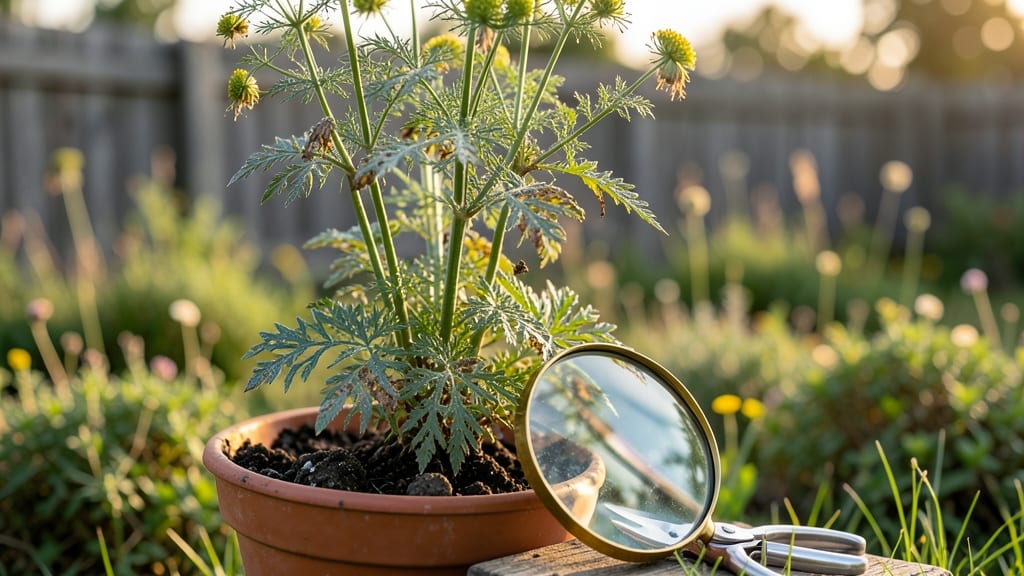
Dill plant diseases can turn your fragrant herb garden into a sad, yellowing mess if you don’t catch them early. I’ve watched powdery mildew creep across my dill like white lace, and downy mildew leave dark, greasy spots that spread faster than weeds.
The good news? Most of these fungal foes share the same weak spot—humidity and poor airflow.
Here’s the thing—dill thrives in cool weather but despises soggy soil and crowded leaves. That’s where the magic happens: spread plants 12 inches apart, water at the base (not overhead), and prune regularly to keep air circulating.
I’ve stopped mildew dead in its tracks with this combo, and you can too without harsh chemicals.
You’ll spot early signs in 3-5 days if you check daily: white dust on leaves (powdery mildew) or yellow patches with fuzzy undersides (downy mildew). A baking soda spray (1 teaspoon per quart of water) works like a charm for mild cases, while neem oil tackles stubborn infections.
The key is acting fast—once spores spread, they’re harder to beat.
This works for both garden beds and containers, and the same rules apply whether you’re growing dill for cooking or pollinators. Let’s turn those sad plants into lush, disease-free stalks before the season’s over.
Root Causes of Dill Plant Decline
Dill plants, with their feathery fronds and aromatic appeal, can quickly turn from a garden star to a wilted mess if fungal diseases take hold. Understanding why these issues arise is the first step to prevention.
Let’s break down the science behind the most common culprits and how environmental factors team up to create the perfect storm for fungal infections.
Fungal spores thrive in damp, stagnant conditions—and dill plants are no exception. When water droplets linger on leaves or soil stays soggy, pathogens like Erysiphe cichoracearum (powdery mildew) or Alternaria (leaf spot) get the upper hand. Here’s why:
- Water droplets act as spore taxis. Overhead irrigation splashes spores directly onto leaves, giving fungi a foothold. Think of it like a fungal express train—each droplet delivers infectious cargo.
- Poor airflow = fungal party zone. Dense dill foliage traps moisture, creating a humid microclimate. Fungi love this environment because it mimics their natural habitat: damp, shaded, and warm.
- Soil saturation stresses roots. When dill plants sit in waterlogged soil, their roots suffocate, weakening defenses. Weak plants are easier targets for opportunistic fungi like Phytophthora.
Pro Tip: 💡 Use drip irrigation or soaker hoses to deliver water at the base—never overhead. Space plants 12–18 inches apart to boost airflow, and water in the early morning so leaves dry quickly.
Fungi aren’t picky—they just need the right conditions to multiply. For dill, the sweet spot for fungal growth is:
| Factor | Fungal Favorite Range | Dill’s Vulnerability |
|---|---|---|
| Temperature | 60–80°F (15–27°C) | Ideal for powdery mildew and downy mildew; above 85°F (29°C), spores may lie dormant but strike when humidity rises. |
| Humidity | 70%+ | Relative humidity above 75% turns leaves into fungal buffets. Alternaria and Septoria love this moisture. |
| Nighttime Dew | Prolonged leaf wetness (>10 hours) | Dew + warm nights = perfect breeding ground for rust fungi (e.g., Puccinia). |
Why it matters: Fungal spores germinate fastest when temperatures are mild (not scorching) and humidity is high. If your garden is a sauna at night or you’re in a coastal area with frequent fog, your dill is at higher risk.
Pro Tip: ✨ Monitor humidity with a hygrometer. If levels creep above 70%, improve airflow with fans or prune crowded plants. Avoid planting dill in low-lying areas where cold air pools.
Healthy dill plants fight off diseases like soldiers with strong immunity. But when they’re malnourished or stressed, their defenses crumble. Here’s how soil issues pave the way for fungi:
- Nitrogen deficiency = weak cell walls. Dill needs nitrogen to build robust leaves. Without it, tissues thin out, making them easier for fungi to penetrate. Powdery mildew often strikes nitrogen-starved plants first.
- Compacted or anaerobic soil. Roots in waterlogged, compacted soil can’t absorb nutrients or oxygen, leading to root rot (caused by Pythium or Rhizoctonia). Weak roots = weak plant.
- Excessive phosphorus or potassium. While these nutrients are essential, imbalances (e.g., too much P/K) can disrupt the plant’s natural defenses, making it more susceptible to Alternaria infections.
Soil test tip: 🌡️ Test your soil’s pH (dill prefers 6.0–7.0). If it’s too acidic (<5.5), fungi like Phytophthora thrive. Amend with lime to raise pH if needed.
Some fungal diseases don’t just spread on their own—they hitch a ride with pests. Here’s how insects turn your dill into a fungal buffet:
- Aphids & whiteflies. These sap-suckers weaken plants and excrete honeydew, a sticky substance that fosters sooty mold (Capnodium) and attracts other fungi.
- Spider mites. Their feeding damages leaf tissue, creating entry points for Alternaria and Septoria.
- Slugs & snails. While they don’t spread disease directly, their slime trails can introduce fungal spores from the soil to leaves.
Break the cycle: 🔥 Introduce beneficial insects (ladybugs, lacewings) to control pests. Use neem oil as a fungicidal spray—it disrupts fungal spore germination and deters pests.
By tackling these root causes—moisture, temperature, soil health, and pests—you’ll starve fungal diseases of their favorite conditions. Next up: How to Outsmart Fungal Invaders before they take over your dill patch.
Quick Fixes for Dill Plant Ailments
Dill plants may be hardy, but they’re not immune to diseases—especially fungal infections like powdery mildew, downy mildew, and leaf spot. The good news? Most issues can be reversed or prevented with the right care.
Below, we’ll break down targeted solutions for each common problem, plus prevention tips to keep your dill thriving. Let’s get those plants back to their fresh, feathery best!
Cause: White, powdery patches on leaves (usually from poor airflow or humidity).
Fix It: 🔥 Remove Infected Leaves – Snip off heavily affected foliage with clean scissors and dispose of it in the trash (not compost). This stops spores from spreading. 🍳 Neem Oil Spray – Mix 1 tsp neem oil + 1 tsp mild soap + 1 quart water. Spray both sides of leaves at dusk to avoid burning. Repeat every 5–7 days until symptoms fade. 👨🍳 Baking Soda Remedy – For mild cases, try 1 tsp baking soda + 1 quart water + a few drops of soap. Spray leaves thoroughly—this raises leaf pH, making it harder for fungi to thrive. ⏰ Prevention: Space plants 12+ inches apart for airflow, water at the base (not overhead), and prune lower leaves to improve circulation.
Cause: Yellow spots on top leaves with purple-gray fuzz underneath (lovers of damp conditions).
Fix It: 🔥 Improve Drainage – Ensure pots have drainage holes and soil isn’t soggy. Avoid watering at night—wet leaves overnight invite spores. 🍳 Copper Fungicide – Use a store-bought copper-based spray (like Bonide Copper Fungicide) once a week for 2–3 weeks. Follow label instructions precisely. 👨🍳 DIY Hydrogen Peroxide Spray – Mix 1 tbsp 3% hydrogen peroxide + 1 quart water. Spray leaves every 3 days until symptoms disappear. (Test on a small leaf first!) ⏰ Prevention: Rotate crops—don’t plant dill in the same spot yearly. Remove old plant debris after harvest to eliminate hiding spots for spores.
Cause: Brown or black spots with yellow halos (often from splashing water or contaminated tools).
Fix It: 🔥 Quarantine the Plant – Move affected dill at least 3 feet away from healthy plants to prevent cross-contamination. 🍳 Prune Aggressively – Cut off all spotted leaves and sterilize your pruners with rubbing alcohol between cuts. 👨🍳 Chlorine Bleach Soak – For severe cases, soak pruners in 1 part bleach to 10 parts water for 10 minutes before reuse. ⏰ Prevention: Water only at the base and avoid overhead irrigation. Rotate garden tools between plants to prevent spreading pathogens.
Cause: Wilting, yellowing leaves with soft, mushy stems (from overwatering or poor drainage).
Fix It: 🔥 Stop Watering Immediately – Let the soil dry out completely before watering again. 🍳 Repot in Fresh Soil – Gently remove the plant, trim rotted roots (healthy roots are firm and white), and repot in sterilized, well-draining soil (add perlite or sand). 👨🍳 Fungicide Treatment – Apply a systemic fungicide (like Mycorrhizal fungi or systemic copper) to the new soil to prevent recurrence. ⏰ Prevention: Use raised beds or containers with drainage holes. Water only when the top inch of soil is dry.
- 🌿 Companion Planting: Grow dill near marigolds or basil—they repel pests and improve airflow. - 🌡️ Temperature Control: Avoid planting dill in hot, humid climates without shade.
Morning sun + afternoon shade works best. - ✨ Sterilize Tools: Clean pruners and gloves with rubbing alcohol between uses to avoid spreading diseases. - 🔄 Crop Rotation: Wait 3 years before replanting dill in the same spot to break disease cycles.
Pro Tip: 🌱 Harvest Regularly! Overcrowded plants get stressed and more susceptible to diseases. Snip leaves often to encourage airflow and growth.
With these steps, your dill should bounce back stronger than ever—ready for your next batch of pickles or soups! 🥒🍲
Frequently asked questions
What are the first signs my dill plants have a fungal disease?
Watch for white powdery patches (powdery mildew) or yellow spots with fuzzy undersides (downy mildew) on leaves. These appear within 3-5 days of infection, often starting on lower leaves first. Check both sides of foliage daily during humid weather.
Can I still use dill leaves if they have mild powdery mildew?
Yes, but only the unaffected leaves. Remove all powdery spots before cooking or drying—fungus can alter flavor and texture. For severe cases, discard the entire plant to prevent spread to other herbs.
How often should I apply neem oil to prevent fungal issues?
Apply neem oil preventively every 2-3 weeks during warm, humid months. For active infections, spray every 5-7 days until symptoms disappear. Always mix with mild soap (1 tsp per quart) for better adhesion.
Will baking soda really help with dill plant diseases?
A homemade baking soda spray (1 tsp baking soda + 1 quart water + few drops of soap) raises leaf pH and disrupts fungal growth. Test on a small leaf first—it works best for early powdery mildew stages. Reapply every 7-10 days.
Why does my dill keep getting diseases even after treatment?
Persistent issues often mean poor airflow or contaminated soil. Check plant spacing (12+ inches apart), improve drainage, and sterilize tools between uses. Rotate crops annually to break disease cycles in your garden.