Trees
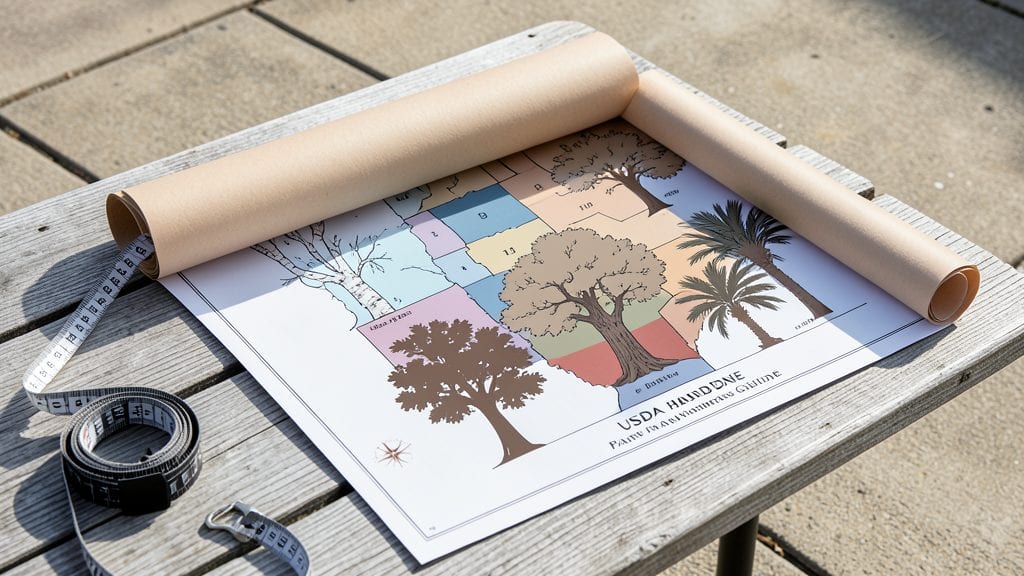
Determining zones for planting trees is essential for their long-term health, as proper spacing prevents overcrowding, ensures adequate sunlight, and reduces competition for water and nutrients. Most mature trees thrive with 20–30 feet between trunks, but adjustments are needed based on species and landscape conditions.
Tree spacing isn't just about aesthetics—it directly impacts how well your trees grow. 🌳 For example, fast-growing species like willows or poplars need more room (up to 40 feet) to prevent root clashes, while slower-growing ornamentals like Japanese maples can handle 15–20 feet between plants.
Urban yards often require creative solutions, such as vertical spacing or container planting, to fit trees into tight spaces without sacrificing their health.
Climate plays a surprising role too. In dry regions, wider spacing (30+ feet) helps conserve soil moisture, while humid areas may allow closer planting (15–20 feet) thanks to better natural water distribution.
Always check your tree's mature canopy width—this is your best guide for spacing, as roots typically spread 1.5 times wider than the branches.
💡 In This Article
- How Tree Spacing Affects Root and Canopy Growth
- Tree Spacing Guidelines by Species and Landscape Type
How tree spacing affects root and canopy growth
Tree roots spread laterally in search of water and nutrients, often extending 1.5 to 2 times the width of the tree's mature canopy. For example, a mature oak with a 50-foot canopy may have roots spreading 75–100 feet outward.
This underground expansion creates invisible competition zones where roots from neighboring trees can tangle, starving each other for resources. Above ground, the canopy follows similar rules—leaves compete for sunlight, and overcrowding leads to weaker branches, increased disease risk, and stunted growth.
Climate dramatically alters these dynamics. In arid regions, trees like mesquite or juniper develop deep, widespread root systems to access scarce moisture, requiring 30–50 feet of spacing.
Meanwhile, in humid climates, species like dogwoods or magnolias thrive with closer spacing (15–20 feet) because higher rainfall reduces soil competition. The key factor is soil moisture retention—dry soils demand wider buffers, while wet soils allow tighter arrangements.
Canopy growth follows predictable patterns too. Most trees follow the "rule of 1/3": after planting, they spend 1/3 of their life establishing roots, 1/3 growing foliage, and 1/3 maturing.
During the foliage phase, branches expand outward at 1–2 feet per year for fast growers (like silver maples) or 6–12 inches per year for slow growers (like Japanese maples). This growth rate dictates how quickly you'll need to thin out young trees to prevent shading.
Here's what happens when spacing is ignored: roots from adjacent trees form a "root graft"—a natural fusion where two trees share nutrients, weakening both. Visually, you'll see yellowing leaves (chlorosis) from nutrient starvation or stunted trunks as trees compete for light.
In extreme cases, trees may even lean toward sunlight, creating structural hazards. The solution? Start with mature size projections—check local nursery guides for each species' expected width.
Urban environments add complexity. Sidewalks, driveways, and buildings create physical barriers that force roots to grow in unnatural directions, increasing stress.
In these cases, dwarf varieties (like columnar oaks) or container-grown trees can fit into 10–15 foot zones, but they still need proper soil depth (18–24 inches) to avoid root circling—a condition where roots grow in tight loops, strangling the tree.
Pro tip: Use a simple formula to estimate spacing—canopy width × 1.5 = minimum distance. For a 25-foot canopy tree, that's 37.5 feet (round up to 40 feet for safety). This ensures both roots and branches have room to expand without conflict. 🌿