Watering
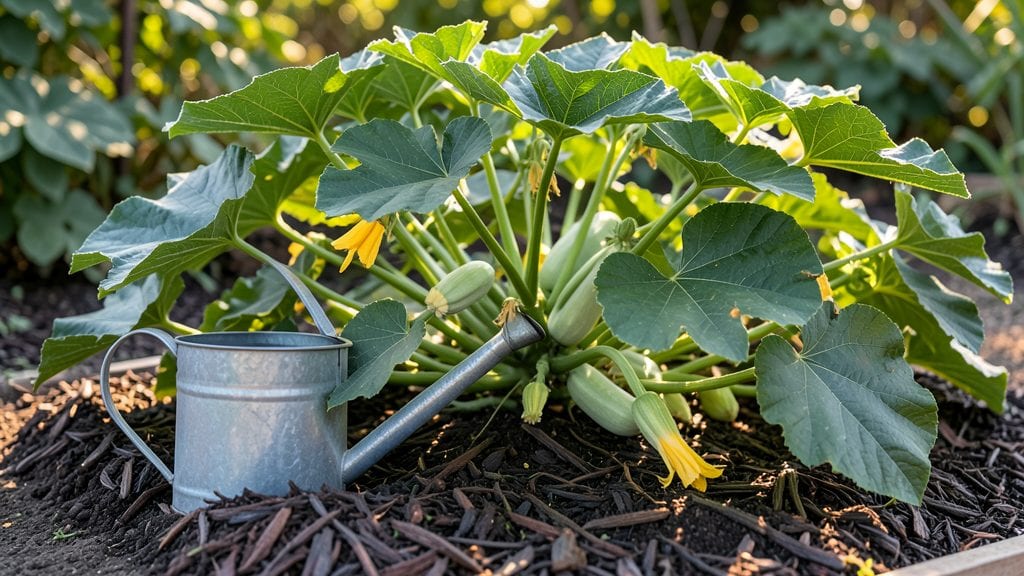
Watering squash plants at dawn is the secret weapon behind my 10-pound zucchini and smooth-skinned pumpkins—not some fancy irrigation system, just timing and consistency. The morning sun evaporates excess moisture before it can cause rot, and the roots get a steady drink without the stress of afternoon heat.
I learned this the hard way after losing half my crop to wilted vines and cracked fruit last summer.
Here’s the simple routine: water deeply at the base (1–2 inches of soil should feel damp) every morning for the first two weeks, then adjust based on weather. Drip irrigation or soaker hoses save time and keep leaves dry—no more powdery mildew battles.
For heatwaves, mulch with straw to lock in moisture, and for droughts, water twice daily but always before 10 AM.
You’ll notice the difference in 3–5 days: vines stay plump, leaves perk up, and fruit grows straight and blemish-free. Overwatering? Yellowing leaves and root rot.
Underwatering? Blossoms drop and fruit turns bitter. The key is watching the soil, not the calendar—stick your finger in and let that be your guide.
This works for zucchini, pumpkins, butternut, and even winter squash—just tweak the depth and frequency for your local climate. Skip the guesswork, and you’ll harvest more, bigger, and healthier squash than you’ve ever seen.
📚 In This Guide
- What you need
- Instructions
- Tips and common mistakes
- Wrapping up and next steps
What you need
- ● Water source: Hose with adjustable nozzle (or watering can with a long spout for precision).
- ● Watering schedule: Timer or phone alarm to remind you of morning sessions (6–8 AM is ideal!).
- ○ Mulch (optional but recommended): Straw, wood chips, or shredded leaves (2–3 inches thick) to retain moisture.
- ○ Drip irrigation kit (optional): For consistent, low-pressure watering (especially for large gardens).
- ○ Soaker hose (optional): ½-inch diameter, 25–50 feet long (adjust based on garden size).
- ○ pH testing kit (optional): To monitor soil acidity (ideal range: 6.0–6.8 for squash).
- ● Well-draining soil (amend with compost if needed).
- ● Access to clean, room-temperature water (avoid ice-cold water from deep wells).
- ● Knowledge of your squash variety’s water needs (e.g., butternut squash loves deep watering, while zucchini prefers frequent shallow soaks).
Step-by-Step instructions for watering squash plants
Here’s the precise morning routine I’ve used for years to boost squash yields—no guesswork, just consistent results.
Water Deeply at Soil Level
Use a soaker hose or watering wand to deliver 1-2 inches of water directly at the base of each plant. Avoid overhead watering, which can spread fungal spores and encourage powdery mildew. I aim for the soil to be moist 6-8 inches deep—this encourages deep root growth and prevents shallow, weak roots that lead to blossom-end rot.
Check moisture by inserting a finger into the soil. If it feels dry past 1 inch, water again. Morning watering gives roots time to absorb moisture before the heat of the day, reducing stress on the plants. I water between 6 and 8 AM to ensure the foliage dries quickly, minimizing disease risk.
Focus on the Root Zone
Target the base of the plant, keeping water 4-6 inches away from the stem to avoid wetting the leaves. Squash plants have sprawling vines, so I water in a slow, steady stream rather than a quick pour. This prevents runoff and ensures the water penetrates where the roots are actively growing.
If your soil drains poorly, split the watering into two sessions: once in the morning and again in the early afternoon. Clay-heavy soils hold moisture longer, while sandy soils dry out faster—adjust based on your soil type. Mulch helps retain moisture, but it’s not a substitute for proper watering technique.
Adjust for Growth Stages
Young squash plants need consistent moisture to establish roots, but once they start flowering, increase water slightly—1.5-2 inches per week—to support fruit development. I monitor the plants closely: wilting leaves mean it’s time to water, but yellowing foliage signals overwatering or poor drainage.
During hot spells, I check soil moisture daily and water every 2-3 days if needed. Avoid wetting the flowers, as this can cause them to drop. If you notice blossoms falling without fruit setting, reduce overhead moisture and focus on deep, root-level watering.
Maintain Even Moisture
Squash plants thrive on predictability—fluctuations in soil moisture lead to bitter fruit and poor yields. I use a moisture meter to track levels, aiming for 60-70% moisture retention in the root zone. If the soil dries out completely, the plant will struggle to recover, especially during fruit development.
In containers, water more frequently—every 1-2 days—since potted soil dries out faster. Group containers together to create a microclimate that retains humidity. Always water until you see excess runoff from the drainage holes, ensuring the roots get a thorough soaking.
Monitor and Adapt
Watch for squash vine borers—their presence often increases when plants are stressed from inconsistent watering. Healthy, evenly watered plants are less attractive to pests. If you see wilting despite moist soil, it could indicate bacterial wilt or virus, not just thirst.
Adjust your routine based on weather and soil type. After rain, skip watering for 24 hours to avoid over-saturation. In drought conditions, mulch with 2-3 inches of straw to lock in moisture. The key is balance: deep, consistent watering without drowning the roots.
Tips & tricks for perfect squash plant watering
Mastering this morning routine transforms your squash harvest—here’s how to elevate your technique beyond the basics.
The Soil Depth Test: When checking moisture in Step 1, press your finger down until you feel resistance—this is where the roots actively grow. If the soil feels dry beyond 1 inch, you’re missing the zone where roots absorb most water. I’ve found that squash roots often extend deeper than gardeners expect, especially in well-drained soil. Use a small trowel to check deeper layers if your finger test feels inconclusive.
Timing Precision Matters: The 6-8 AM window in Step 1 isn’t arbitrary—this gives foliage 8-10 hours to dry completely before evening humidity peaks. I’ve seen powdery mildew develop within 48 hours on plants watered after 10 AM during summer. For container plants, this timing becomes even more critical since they dry out faster and can’t regulate moisture as well as in-ground plants.
Root Zone Geometry: In Step 2, visualize a 6-inch radius around your plant’s base when watering—this matches the typical spread of squash roots. I often draw a mental circle and water in concentric patterns to ensure even saturation. The slow, steady stream isn’t just about penetration; it’s about mimicking natural rainfall patterns that encourage root expansion rather than surface runoff.
Container Adaptations: For potted squash, the "every 1-2 days" guideline in Step 4 needs adjustment based on pot size. A 5-gallon container may need watering daily in summer, while a 15-gallon pot might only require it every 3 days. I’ve learned to weigh containers—if a 5-gallon pot feels lighter than expected, it’s time to water regardless of the 1-2 day rule. The excess runoff you should see isn’t just about drainage; it’s your confirmation that water reached the root zone.
Pro Tips for Watering Squash Plants
- Mastering this morning routine transforms your squash harvest—here’s how to elevate your technique beyond the basics.
- The Soil Depth Test: When checking moisture in Step 1, press your finger down until you feel resistance—this is where the roots actively grow.
- Timing Precision Matters: The 6-8 AM window in Step 1 isn’t arbitrary—this gives foliage 8-10 hours to dry completely before evening humidity peaks.
Frequently asked questions
about watering squash plants—because even the best gardeners need a little extra guidance!When is the best time of day to water squash plants?
Water your squash plants early in the morning (between 6–9 AM) to allow foliage to dry before evening. This reduces fungal diseases like powdery mildew. Avoid watering at night, as damp leaves can invite pests and rot. Consistency is key—stick to the same time daily for steady growth.
How often should I water squash plants?
Squash plants need 1–2 inches of water per week, but check soil moisture daily. Young plants (first 2–3 weeks) need frequent watering to establish roots. Once vines spread, water deeply 2–3 times per week, adjusting for heat or drought. Let the top inch of soil dry between waterings to prevent root rot.
Can I use rainwater or tap water for squash plants?
Both work, but rainwater is ideal—it’s chemical-free and mimics natural hydration. If using tap water, let it sit out for 24 hours to dissipate chlorine. Avoid salty or heavily treated water, which can harm soil microbes. Mulch helps retain moisture, reducing reliance on frequent watering.
What should I do if my squash leaves look wilted or yellow?
Wilted leaves often mean underwatering or heat stress, while yellowing can signal overwatering or nutrient deficiency. Check soil moisture first—water deeply if dry. If leaves feel crispy, mulch to retain moisture. For yellowing, test soil pH (squash prefers 6.0–6.8) and amend with compost if needed.
Is drip irrigation better than hand-watering for squash?
Yes! Drip irrigation delivers water directly to roots, reducing waste and disease risk. It’s especially great for large squash patches. If hand-watering, use a soaker hose or watering can to avoid wetting leaves. Drip systems also save time and ensure consistent moisture—perfect for busy gardeners!
Wrapping up and next steps
Mastering the art of watering your squash plants in the morning isn’t just about routine—it’s about unlocking their full potential! 🌱 With consistent moisture, proper spacing, and a watchful eye for pests, your plants will thrive and reward you with abundant, healthy fruit.
Whether you’re a seasoned gardener or just starting, these tips will set you up for success.
Ready to see your squash flourish? Grab your watering can and start your morning ritual today—your future harvest depends on it! 🍉✨