Planting
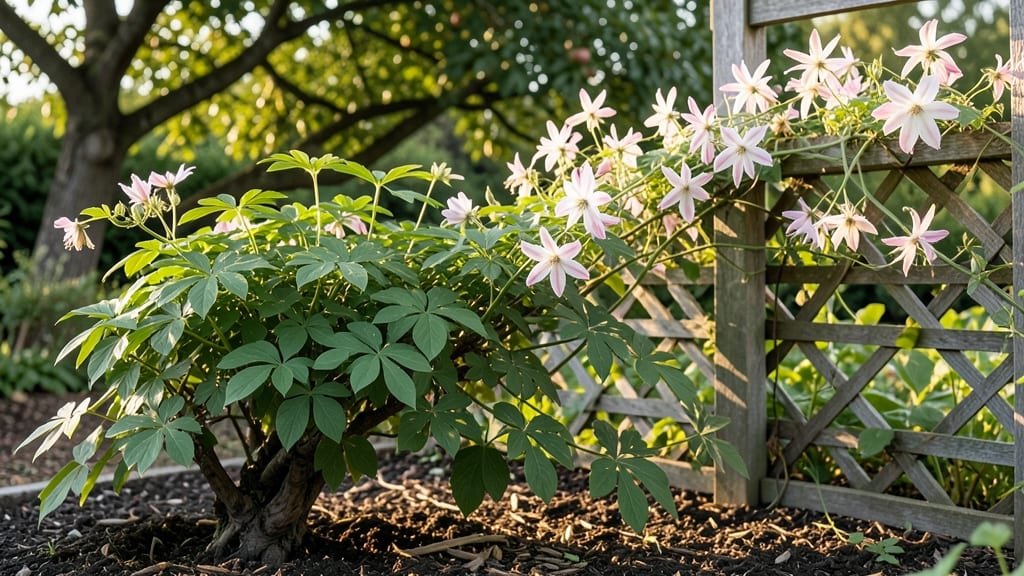
Clematis plant names like 'Jackmanii' and 'Niobe' unlock gardens that feel like storybook pages. ✨ I’ve watched these vines transform plain fences into cascading canopies of purple, pink, and white—each variety with its own personality and growing quirks.
The right clematis can turn a dull corner into a vertical masterpiece, but choosing the wrong one means struggling with floppy stems or faded blooms.
Some clematis thrive in full sun while others prefer shade, and their soil needs range from well-draining to consistently moist. 'Montana' climbs effortlessly with tiny white flowers, while 'Jackmanii' demands sturdy support for its bold purple blooms.
The key? Matching the plant to your garden’s light, soil, and space—because the wrong spot can turn a showstopper into a struggle.
You’ll end up with vines that bloom reliably, cover unsightly walls, or spill dramatically over trellises. The fragrance of 'Alionushka' or the sheer volume of 'Durandii' flowers will make neighbors ask, "What’s that?"—and you’ll get to say, "This? It’s my secret weapon."
Whether you’re working with a sunny patio, a shady arbor, or a windy coastal garden, there’s a clematis that fits. Let’s pick the perfect one for your space—and watch your garden come alive with vertical drama.
📚 In This Guide
- What you need
- Instructions
- Tips and common mistakes
- Wrapping up and next steps
What you need
- ● Clematis plants: 1–3 nursery-grown clematis (choose from Clematis montana, Clematis viticella, or Clematis armandii for variety)
- ● OR 50–100 clematis seeds (if starting from scratch)
- ● Potting soil or garden soil: 5–10 gallons (well-draining, rich in organic matter)
- ● Compost or aged manure: 2–3 cups (for nutrient boost)
- ● Slow-release fertilizer (10-10-10 or 5-10-10): 1–2 tablespoons per plant
- ● Mulch: 2–3 inches (shredded bark or straw)
- ● Garden trowel or transplant spade: 1 (for digging)
- ● Pruning shears: 1 (sharp, sterilized)
- ● Gloves: 1 pair (gardening gloves for protection)
- ● Watering can or hose with nozzle: 1 (for gentle watering)
- ○ Support structure (optional but recommended): Trellis, arbor, or obelisk (6–10 feet tall)
- ● OR sturdy fence/post for climbing varieties
- ● Plant ties or twine: 1 roll (for securing vines)
- ● Sunlight: 6+ hours of direct sun (varies by clematis type)
- ● pH level: 6.0–7.0 (test soil if unsure)
- ● Space: 3–6 feet apart (depending on mature size)
- ● Water access: Consistent moisture (avoid soggy soil)
How to select and understand Clematis plant names for your garden
Clematis aren’t just vines—they’re a botanical treasure trove of names that reveal their growth habits, colors, and even fragrances.
🌿 Step 1: Decode Clematis Names by Growth Habit
Clematis names often include Latin terms that describe their climbing behavior. For example, Clematis montana ("montana" meaning mountain) clings to surfaces with leafy stems, while Clematis viticella ("viticella" from "vitis," the Latin for grapevine) twines aggressively like a tendril. The suffix -flora (as in Clematis armandii var. flora) indicates a more compact, bushier growth pattern.
I always check the growth habit first—it determines where you’ll place them. Large-flowered varieties like Clematis jackmanii need sturdy trellises, while smaller types like Clematis texensis thrive in pots or along fences. The name Clematis recta ("recta" for upright) is a dead giveaway for its vertical structure.
🌱 Step 2: Identify Clematis by Flower Color and Size
Many clematis names incorporate color descriptors in Latin or Greek. Clematis lanuginosa ("lanuginosa" meaning woolly) produces soft pink blooms, while Clematis 'Jackmanii' (a cultivar name) is famous for its deep purple, nodding flowers. The term alba (as in Clematis alpina var. alba) signals white flowers, and rubra (like Clematis integrifolia 'Rubra') means red.
Size matters too—names like Clematis 'Niobe' hint at smaller blooms (4 inches), while Clematis 'Perle d'Azur' suggests larger, showy flowers (6+ inches). I always match the name’s promise to my garden’s light conditions. For example, Clematis 'Vyvyan Pennell' thrives in partial shade, while Clematis 'The President' demands full sun.
☀️ Step 3: Understand Seasonal Blooming Clues in Names
Some clematis names reveal their blooming seasons. Clematis montana ("montana" for early spring) flowers in late winter or early spring, while Clematis viticella (late summer to fall bloomer) gets its name from its autumnal peak. The term vernalis (as in Clematis 'Vernalis') signals early blooms, and autumnalis (like Clematis 'Autumnalis') means prolonged fall color.
I prioritize names like Clematis 'Nelly Moser' for late spring blooms or Clematis 'Henryi' for winter interest. If you want a garden with year-round drama, mix early, mid, and late-season varieties—like pairing Clematis montana (spring) with Clematis 'Fascination' (summer) and Clematis 'Durandii' (fall).
✂️ Step 4: Recognize Fragrant and Unique Cultivar Names
Fragrance is often hidden in clematis names. Clematis montana is legendary for its intoxicating scent, while Clematis 'Alionushka' (a hybrid) offers a sweet, honey-like aroma. The name Clematis 'Bees’ Joy' is a dead giveaway for its pollinator appeal. Even some less obvious names, like Clematis 'Etoile Violette', deliver subtle, spicy fragrances.
For unique growth forms, names like Clematis 'Hagley Hybrid' (a dwarf type) or Clematis 'Multiplex' (a fast-growing climber) tell you exactly what to expect. I always research cultivar names—some, like Clematis 'The Queen' or Clematis 'Princess Diana', are named for their regal appearance, while others, like Clematis 'Nipponensis', hint at their Asian origins.
🌿 Step 5: Cross-Reference Names with Pruning Groups
Clematis names don’t always reveal their pruning needs, but knowing the groups helps. Group 1 (early spring bloomers like Clematis montana) shouldn’t be pruned, while Group 3 (late summer/fall bloomers like Clematis viticella) needs heavy pruning. Group 2 (mid-season, like Clematis 'Jackmanii') falls in between.
I keep a pruning chart near my clematis—names like Clematis 'Warsaw Nursery' (Group 3) get hard pruned in early spring, while Clematis 'Comtesse de Bouchard' (Group 1) stays untouched. Mispruning a clematis can mean no flowers, so I double-check names against pruning guides before cutting.
Tips & tricks for decoding Clematis plant names like a botanist
Here's what nobody tells you about unlocking the secrets hidden in clematis names—these tricks will transform your garden planning from guesswork to precision.
Latin Roots Reveal Growth Secrets: The names aren't just decorative—they're botanical blueprints. For example, the suffix -montana (as in Clematis montana) literally means "mountain," hinting at its vigorous climbing nature. I always cross-reference these terms with growth habit charts—it's like having a built-in trellis recommendation system. The term recta ("upright") in Clematis recta is a dead giveaway for vertical growth that needs minimal support.
Color and Size Clues in Cultivar Names: Those fancy cultivar names like 'Perle d'Azur' aren't just marketing—they promise 6-inch showstopper blooms, while 'Niobe' signals more modest 4-inch flowers. I keep a color wheel handy when selecting varieties, matching Latin descriptors like alba (white) or rubra (red) to my garden's color palette. Pro tip: The word lanuginosa ("woolly") in Clematis lanuginosa doesn't just describe texture—it's a subtle hint at the soft pink bloom color.
Seasonal Timing Hidden in Terminology: The term vernalis (as in Clematis 'Vernalis') is your early spring alert, while autumnalis signals prolonged fall interest. I've learned to think of these names as built-in bloom calendars. When planning my vertical garden, I group varieties by season—pairing Clematis montana (early) with Clematis 'Fascination' (summer) creates natural succession. The name viticella itself reveals its late-season peak, derived from the Latin for grapevine's autumn harvest time.
Fragrance and Form in Unassuming Names: Some of the most fragrant varieties hide their scents in unexpected names. Clematis 'Bees’ Joy' is a dead giveaway for pollinator appeal, but even 'Etoile Violette' delivers subtle spicy fragrances. For growth forms, names like 'Hagley Hybrid' (dwarf) or 'Multiplex' (fast-growing) tell you exactly what to expect without needing to research further. I always make notes about these characteristics—they're the hidden gems that elevate a good garden to a spectacular one.
Pro Tips for Clematis Plant Names
- Here's what nobody tells you about unlocking the secrets hidden in clematis names—these tricks will transform your garden planning from guesswork to precision.
- Latin Roots Reveal Growth Secrets: The names aren't just decorative—they're botanical blueprints.
- Color and Size Clues in Cultivar Names: Those fancy cultivar names like 'Perle d'Azur' aren't just marketing—they promise 6-inch showstopper blooms, while 'Niobe' signals more modest 4-inch flowers.
Frequently asked questions
Got questions about clematis plant names and how to make the most of these stunning climbers? Here are some of the most common queries—plus quick answers to help you garden like a pro!
What are the most popular clematis varieties for beginners?
Start with hardy, low-maintenance picks like Clematis 'Jackmanii' (a classic purple bloomer) or 'Niobe' (deep red, thrives in shade). For vibrant colors, try 'Vyvyan Pennell' (blue-pink) or 'Perle d’Azur' (lavender-blue). These varieties are forgiving and perfect for first-timers!
When is the best time to plant clematis?
Plant in early spring or fall (4–6 weeks before frost) for ideal root establishment. Avoid summer heat, which can stress young plants. If buying bare-root clematis, soak roots for 1–2 hours before planting to rehydrate them. Pro tip: Use a root stimulator for extra vigor!
Can I grow clematis in containers? Yes—but how?
Choose a large container (15+ gallons) with drainage holes and a mix of potting soil, compost, and perlite. Dwarf varieties like 'Freckles' or 'Hagley Hybrid' work best. Keep soil moist (but not soggy) and provide a trellis or obelisk for support. Move containers to partial shade in hot climates.
Why aren’t my clematis flowers opening? Troubleshooting tips!
Common culprits:
- Too much shade: Clematis need 6+ hours of sun (especially for blooms). Try moving to a sunnier spot.
- Over-pruning: Prune only after blooming (Group 1–2) or before buds swell (Group 3). Avoid cutting back old wood!
- Nutrient deficiency: Feed with a balanced fertilizer (10-10-10) in early spring and again after blooming.
- Stress from transplant shock: Mulch well and water deeply for the first 2 weeks after planting.
How do I choose clematis based on bloom time and color?
Match your garden’s timing and style:
Bloom Time
Top Varieties
Color Palette
Early spring
'Bees Jubilee', 'Wyatt'
Pink, purple, white
Summer (repeat blooms)
'Durandii', 'The President'
Blue, red, violet
Late summer/fall
'Perle d’Azur', 'Nipponensis'
Lavender, cream, green
Pro tip: Mix early and late bloomers for continuous color all season!
Wrapping up and next steps
From delicate Clematis montana to bold Clematis armandii, the world of clematis offers a dazzling array of plant names—each bringing its own charm to your garden’s vertical canvas.
Whether you're drawn to fragrant blooms, vibrant colors, or hardy climbers, there’s a clematis perfect for your space. Now’s your moment to transform a simple wall or trellis into a breathtaking masterpiece!
Ready to dive in? Start by sketching your garden’s layout—then pick a clematis that matches your vision (and climate!). Happy gardening! 🌿✨