Pruning
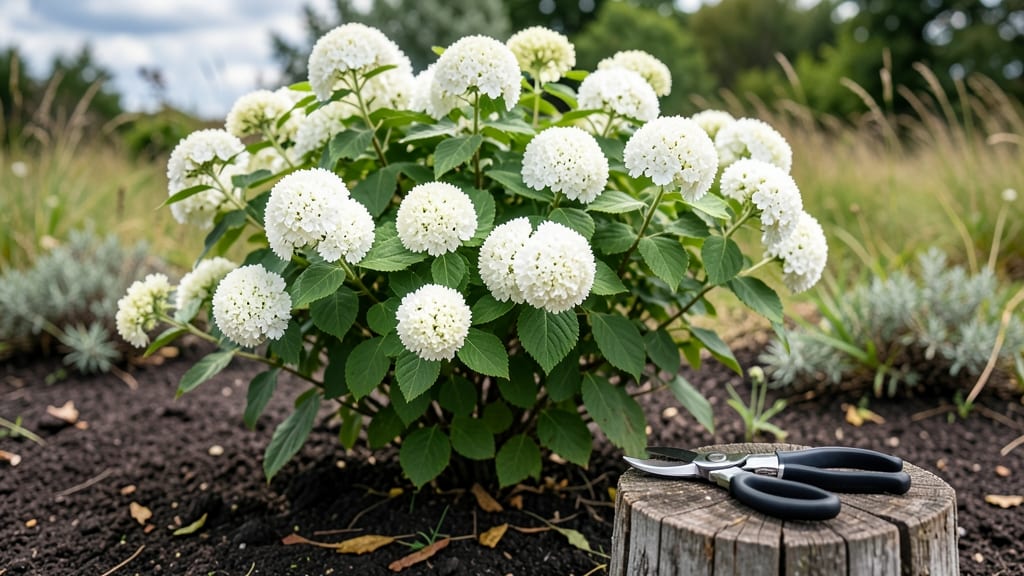
My snowball plant pruning routine keeps this shrub looking like a showstopper all year—just three strategic cuts make the difference. I learned the hard way that pruning too late or too aggressively turns those lush white blooms into a sad, leggy mess.
The secret isn’t complicated: timing matters, and the right tools make it foolproof.
You’ll need sharp bypass pruners, a pair of gloves, and a clear day—no wind or rain. Start by removing dead or crossing branches first, then shape the plant by cutting just above outward-facing buds. This keeps the center open for airflow and encourages more blooms next season.
Most people overthink it, but the real magic is in the three simple cuts that transform a wild shrub into a structured masterpiece.
After pruning, your snowball bush will reward you with denser foliage and even more dramatic blooms in spring. The key is to finish up by early summer so new growth has time to harden off before winter.
In colder climates, a light layer of mulch helps protect those fresh cuts from harsh freezes.
This method works whether you’ve got a mature shrub or a young plant—just adjust the intensity. The goal is always the same: a bush that looks intentional, not neglected. Ready to give it a try?
The Hidden Triggers Behind Unruly Growth
Your Viburnum opulus—commonly known as the snowball plant—is a stunning shrub that thrives on structure and balance. But when its growth goes haywire, it’s usually not a random act. Instead, it’s a response to specific environmental or cultural cues.
Understanding these triggers is the first step to regaining control with your pruning shears. Here’s why your snowball plant might be sending you mixed signals:
Snowball plants are heavy feeders, and when their roots become root-bound or compete with neighboring plants for resources, they prioritize survival over aesthetics. Here’s how it plays out:
- Competition for space: If planted too close to trees, walls, or other shrubs, roots struggle to access water and nutrients. The plant responds by sending out wild, unchecked growth to maximize sunlight exposure—often resulting in leggy, sparse branches.
- Soil depletion: Over time, the same patch of soil loses essential nutrients like nitrogen and phosphorus. Without these, the plant can’t support dense, uniform foliage, leading to uneven or sparse blooms.
- Root restriction: Container-grown snowball plants hit a tipping point when roots circle the pot. This strangles growth, forcing the shrub to stretch upward or outward in desperate search of space.
Actionable fix: Test soil pH (ideal: 5.0–6.5) and amend with compost or a slow-release fertilizer. If root-bound, repot into a larger container or transplant into the ground with well-draining soil.
Snowball plants are spring bloomers, meaning their flowers form on old wood (last year’s growth). When pruning or other stressors occur at the wrong time, the plant may either:
- Skip flowering: Pruning after mid-summer removes next year’s flower buds, leaving you with a bare shrub in spring.
- Overcompensate with wild growth: Heavy pruning in late fall or winter can shock the plant, prompting it to send out sparse, elongated shoots as it scrambles to recover.
- Misplaced energy: If pruned too aggressively in spring, the plant diverts energy to regrowing leaves instead of forming dense, rounded canopies.
Actionable fix: Prune immediately after flowering (late May–June) to avoid cutting off next year’s blooms. For shaping, limit cuts to 1/3 of the plant’s height and avoid drastic reductions.
Snowball plants are sun-loving but heat-sensitive. When their light or temperature conditions shift unexpectedly, growth patterns go haywire:
- Too much shade: Without 6+ hours of sunlight daily, the plant stretches toward light, producing long, weak stems with sparse foliage.
- Sudden heatwaves: Extreme temperatures (above 90°F/32°C) can scorch leaves, causing the plant to abort flower buds and focus on survival.
- Cold snaps in early spring: Late frosts can damage emerging buds, leading to lopsided or patchy regrowth.
Actionable fix: Ensure the plant gets morning sun + afternoon shade in hot climates. Mulch around the base to regulate soil temperature and protect from frost with burlap wraps if needed.
Unseen invaders like spider mites, scale insects, or fungal diseases (e.g., powdery mildew) can weaken the plant’s framework, leading to:
- Stunted growth: Pests sap nutrients from leaves, causing yellowing and reduced vigor.
- Deformed branches: Fungal infections can warp stems, leading to crooked or brittle growth.
- Premature leaf drop: Stress from infestations forces the plant to shed foliage, leaving bare patches.
Actionable fix: Inspect leaves monthly for pests (look for webbing or sticky residue). Treat with neem oil or insecticidal soap. For fungal issues, prune affected branches and apply copper fungicide.
Most of these issues stem from miscommunication between the plant and its environment. By addressing the root cause—whether it’s roots, timing, light, or pests—you’ll restore harmony and encourage that lush, snowball-shaped glory you love.
Revive Your Snowball Plant With These Pruning Fixes
---
If your snowball plant (Viburnum opulus) has lost its shape, stopped blooming, or looks leggy, the good news is that targeted pruning can bring it back to life. Below are practical, step-by-step solutions tailored to common issues—plus prevention tips to keep your plant thriving year-round. Think of this as your plant’s "reset button" with minimal stress!
---
Problem: You waited until after the blooming season to prune, and now your plant has long, bare stems with no flowers.
Fix It:
- 🔪 Cut back by ⅓ – Focus on the oldest, thickest stems first. Use clean, sharp pruners to make cuts just above a leaf node (the bump where leaves or buds grow).
- 🌱 Encourage new growth – Prune in early spring (before buds swell) or right after flowering. Avoid heavy cuts in late summer or fall, as this can stimulate tender growth that won’t harden off before winter.
- 💡 Pro Tip: If your plant is severely overgrown, thin out 20% of the oldest stems at the base to rejuvenate it. New shoots will fill in quickly!
Prevent It: - Mark your calendar for late winter/early spring pruning—this is the sweet spot for snowball plants. - Never prune after mid-summer; this can remove next year’s flower buds.
---
Problem: Freeze-thaw cycles or heavy snow snapped branches, leaving a messy, uneven silhouette.
Fix It:
- 🧹 Clean up the damage – Remove dead or broken branches at the base (no stubs!). If a branch is only partially damaged, trim it back to healthy wood.
- 🌿 Shape it up – Use the third-cut method for large branches:
- Make your first cut 1–2 feet out from the trunk on the underside of the branch.
- Cut down halfway through from above, stopping just above the first cut.
- Gently lower the branch and make a final cut just outside the branch collar (the swollen area where the branch meets the trunk).
- 🔥 Boost recovery – Apply a balanced fertilizer (10-10-10) in early spring to help regenerate growth.
Prevent It: - Wrap young plants in burlap or use tree guards to shield them from wind and snow. - Water deeply before winter to prevent frost cracks (snowball plants hate soggy roots in cold weather).
---
Problem: Your snowball plant has lush foliage but zero blooms. Likely culprits: pruning at the wrong time or cutting too aggressively.
Fix It:
- 📅 Time it right – Snowball plants bloom on old wood (last year’s growth). Prune immediately after flowering (late spring) to avoid removing next year’s buds.
- 🌿 Lighten up – If you’ve been shearing (like a hedge), switch to selective thinning. Remove only:
- Dead or crossing branches.
- Stems growing inward (toward the center).
- Suckers at the base.
- 💡 Pro Tip: If your plant is <5 years old, avoid heavy pruning—it needs time to establish a strong framework for flowers.
Prevent It: - Skip the hedge trimmer—snowball plants hate being sheared. Use hand pruners for precision. - Feed in early spring with phosphorus-rich fertilizer (e.g., 5-10-5) to encourage blooming.
---
Problem: Yellowing leaves, sawdust-like frass (from aphids), or fungal spots mean your plant is struggling—and pruning can help.
Fix It:
- 🚿 Clean the canopy – Remove all diseased or pest-infested leaves/branches. Bag and dispose of them (don’t compost!).
- 🌬️ Open it up – Thin out dense growth to improve airflow. Aim for a vase-like shape with an open center.
- 🧴 Treat as needed – After pruning, spray with:
- Neem oil (for aphids, mites).
- Copper fungicide (for powdery mildew or leaf spot).
- 💡 Pro Tip: Prune on a dry, windless day to prevent spreading spores or attracting pests.
Prevent It: - Water at the base (avoid wetting leaves to reduce fungal risk). - Inspect monthly for early signs of pests (sticky residue = aphids; chewed leaves = caterpillars).
---
Problem: Your snowball plant has long, sparse stems with few leaves—it looks "whippy" and weak.
Fix It:
- 🍃 Pinch back tips – For young plants, gently pinch off the top 2–3 inches of new growth in early summer. This encourages branching.
- 🔪 Cut back hard – For mature plants, trim 1/3 of the tallest stems to just above a leaf node. This forces energy into lateral (side) buds.
- ☀️ Give it light – Leggy growth often means your plant isn’t getting enough sun. Move it to 6+ hours of sunlight daily.
Prevent It: - Fertilize lightly in spring with nitrogen (e.g., 20-10-10) to support leafy growth. - Avoid overwatering—soggy soil leads to weak stems.
---
Remember: Snowball plants are forgiving. Even if you’ve neglected pruning for years, a gradual reset (spread over 2–3 seasons) will bring it back to health. And once you master the three simple cuts—thinning, shaping, and rejuvenating—your plant will reward you with vibrant blooms and lush foliage for decades.
Frequently asked questions
When is the best time to prune my snowball bush for maximum blooms?
Prune immediately after flowering in late spring (May-June) to preserve next year's blooms. This timing lets the plant set flower buds on old wood while still allowing you to shape the shrub. Avoid pruning after mid-summer, as this removes next season's flower buds entirely.
Can I prune my snowball plant in winter?
Light pruning to remove dead or damaged branches is fine in late winter, but avoid heavy shaping. Winter pruning can expose tender new growth to frost damage. For major shaping, wait until after flowering in spring. If you must prune in winter, do it on a mild day and avoid cutting more than 1/3 of the plant's height.
How do I know if I'm pruning too much?
You're over-pruning if you see bare stems, no new growth after 2-3 weeks, or if the plant looks like it's struggling to recover. Snowball bushes handle light annual pruning well, but never remove more than 1/3 of the plant's height in one season. For severely overgrown plants, spread pruning over 2-3 years to avoid shock.
What should I do with the branches I prune off?
Remove all pruned branches immediately to prevent disease spread. For healthy branches, compost them (if disease-free). For branches with signs of disease or pests, bag them and dispose of them in the trash. Never leave pruned material on the ground near your plant.
How do I encourage more blooms after pruning?
Focus on selective pruning: remove only dead, crossing, or inward-growing branches. Avoid shearing. Feed with phosphorus-rich fertilizer (5-10-5) in early spring, and ensure your plant gets 6+ hours of sunlight daily. Prune immediately after flowering to preserve next year's bloom buds. The key is to maintain an open center for airflow while keeping the plant's natural shape.