Pruning
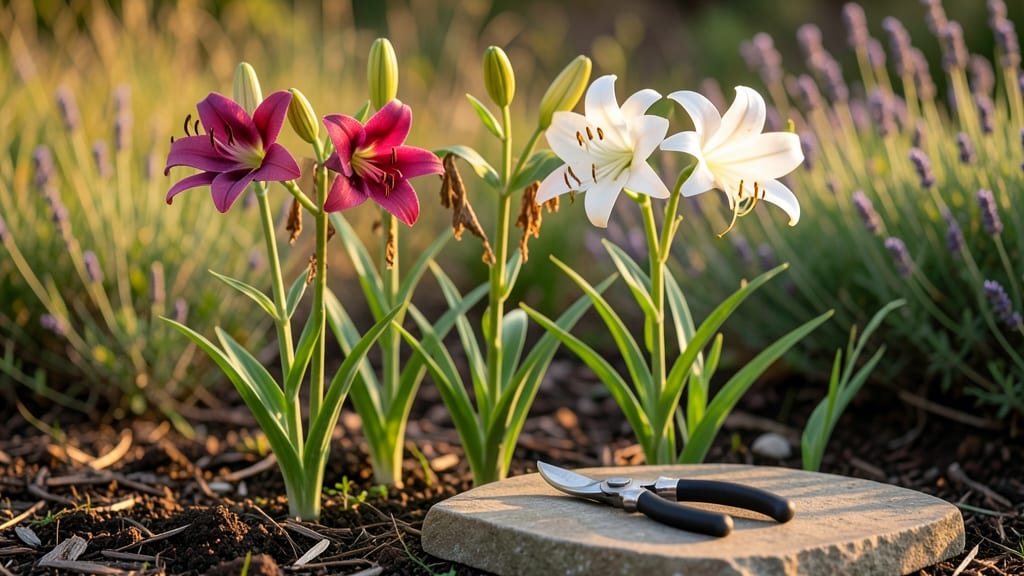
Pruning lily plants at the right time transforms your garden from a one-time showstopper to a repeat performer. 🌸 I learned the hard way—skipping this step means fewer blooms next year, and nobody wants that.
The key is timing and technique, whether you're dealing with Asiatic lilies, Oriental hybrids, or daylilies.
You only need three things: sharp pruners, a clean bucket for cuttings, and a clear day to avoid soggy stems. Start by removing spent blooms and seed pods immediately—they sap energy from the bulbs.
For true lilies, cut back the foliage by a third after blooming, but leave daylilies until they yellow naturally in fall. This simple routine keeps your plants healthy and blooming for years.
What you’ll get is a garden that looks like it belongs in a nursery catalog. Those dark green leaves? They’re storing energy for next year’s blooms. With proper pruning, you’ll see stronger stems, bigger flowers, and fewer floppy stalks.
The secret is patience—don’t rush the process, and you’ll be rewarded with lilies that outshine everything else in the yard.
Works for all lily types, from early-blooming Asiatics to late-season Orientals. Here’s how to do it right without overcomplicating things—because gardening should feel like a joy, not a chore.
📚 In This Guide
- What you need
- Instructions
- Tips and common mistakes
- Wrapping up and next steps
What you need
- ● Pruning shears or secateurs: Sharp, clean, and sterilized (rubbing alcohol or bleach wipe). Choose bypass pruners (for clean cuts) or anvil pruners (for thicker stems).
- ○ Garden gloves: Heavy-duty (nitrile or leather) to protect against thorns and dirt. Optional: Waterproof gloves if working in damp soil.
- ● Disinfectant solution: 1 part bleach to 9 parts water (for sterilizing tools between cuts). Alternative: Hydrogen peroxide (3%) or isopropyl alcohol.
- ○ Garden twine or plant ties: 3–5 feet (for securing supports if needed). Optional: Small stakes or bamboo canes (if lilies are top-heavy).
- ● Compost or mulch: 2–3 inches of aged compost or shredded bark to replenish soil after pruning.
- ● Trash bag or bucket: For disposing of pruned foliage (avoid composting diseased leaves).
- ● Hand lens or magnifying glass: For spotting pests or fungal spores on stems.
- ● Pruning saw: If dealing with woody, thick stems (rare for most lilies but useful for established plants).
- ● Fungal spray (copper-based): Preemptive treatment if your area is prone to mildew.
- ● Knee pad or small stool: For comfort during low-to-the-ground pruning.
Step-by-Step guide for pruning lily plants
Here's how I keep my lilies blooming bigger and stronger each year—no fancy tools, just smart cuts.
✂️ Step 1: Prune After the First Bloom Cycle
Wait until the first bloom cycle finishes completely—when flower stalks turn brown and crispy. Cut the spent flower stalks down to 6 inches above the ground using clean, sharp pruners. This redirects the plant's energy from seed production back into next year's blooms.
Real talk: I used to cut too low and nearly severed new buds forming at the base. Now I mark the 6-inch line with a piece of tape on my pruners to avoid mistakes. Never use dull scissors—they tear stems and invite disease.
✂️ Step 2: Remove Damaged or Diseased Foliage
Inspect the plant for yellowed, spotted, or mushy leaves—these are signs of disease or pests. Snip them off at the base with your pruners, cutting through the stem cleanly. Healthy leaves should be deep green and upright.
Here's the thing—don't remove more than 20% of the foliage at once. Lilies need their leaves to photosynthesize until late fall. I wait until new growth appears before tackling the next section, which tells me the plant has recovered.
🌱 Step 3: Trim Back After Full Bloom Season
Once all blooms are gone and foliage starts yellowing naturally, cut back the remaining stalks to 2-3 inches above ground level. This prevents energy waste on maintaining dead growth while still allowing sunlight to reach the bulbs.
I always do this in late fall after first frost—the plant's natural dormancy period. Never cut back in summer or you'll stunt next year's blooms. The key is timing: wait until 70% of leaves turn brown.
⏰ Step 4: Clean Up Debris for Next Season
Remove all plant debris from the garden bed immediately after pruning. Place it in your compost bin or trash—never leave old stems on the ground. This prevents fungal spores from overwintering and infecting next year's plants.
I also sterilize my pruners with rubbing alcohol between cuts to avoid spreading any hidden pathogens. A quick wipe with a cloth soaked in alcohol takes seconds and keeps your tools ready for the next task.
🌿 Step 5: Fertilize and Mulch After Pruning
Spread a 2-inch layer of compost or well-rotted manure around the base of each plant after pruning. Water thoroughly to help nutrients settle into the soil. This gives your lilies a nutrient boost for next year's growth.
Top with 3 inches of mulch**—I use straw or shredded leaves—to protect the bulbs through winter. The mulch insulates the soil while preventing weeds. Check mulch levels in spring—if it's broken down, add more to maintain that protective layer.
Tips & tricks for pruning lily plants
Smart pruning keeps your lilies thriving—here's how to avoid common mistakes and get the most out of every cut.
Precision Matters in Step 1: That 6-inch mark after the first bloom cycle is crucial. I learned this the hard way after cutting too low and nearly damaging the next year's buds. Use a permanent marker on your pruners to create a visual guide—this ensures you're always cutting at the perfect height. The goal is to remove only the spent blooms while preserving the energy stored in the lower stems.
Seasonal Timing is Everything: Never cut back in summer—this is when lilies are actively growing and storing energy for next year's blooms. Wait until late fall after first frost when 70% of leaves turn brown (Step 3). This natural dormancy period is when the plant has already absorbed all the sunlight and nutrients it needs. Cutting too early disrupts this process and can weaken your plants.
Disease Prevention Starts with Clean Tools: Sterilizing your pruners between cuts (Step 4) is a game-changer. I keep a small bottle of rubbing alcohol and a cloth in my gardening bag. A quick wipe between each plant prevents spreading fungal spores and bacterial infections. This simple habit has kept my lily beds healthier for years, especially in humid climates where diseases spread quickly.
Foliage Management Strategy: Remember that 20% limit when removing damaged leaves (Step 2). I think of it as the "one-fifth rule"—never take more than one-fifth of the foliage at once. The leaves are working hard until late fall, photosynthesizing to build up energy for next year's blooms. If you remove too many, you're essentially starving your plants before they've had their chance to store up nutrients.
Pro Tips for Pruning Lily Plants
- Smart pruning keeps your lilies thriving—here's how to avoid common mistakes and get the most out of every cut.
- Precision Matters in Step 1: That 6-inch mark after the first bloom cycle is crucial.
- Seasonal Timing is Everything: Never cut back in summer—this is when lilies are actively growing and storing energy for next year's blooms.
Frequently asked questions
Got questions about pruning lilies?
You’re not alone! Here are answers to the most common concerns to help you keep your plants thriving and blooming beautifully.
When is the best time to prune lily plants?
Prune lilies in late fall or early spring (before new growth starts) to avoid disturbing winter dormancy. For spent blooms, trim them back right after flowering to redirect energy into next year’s growth. Avoid pruning in summer—it can stress the plant.
Should I cut back lilies after they finish blooming?
Yes! After lilies bloom, cut the flower stalks back to the ground (but leave the foliage). The leaves photosynthesize until they turn yellow, feeding the bulbs for next season. Only remove dead or yellowed leaves after they’ve fully browned.
What if I prune too late? Can I still save my lilies?
If you prune too late (e.g., after foliage dies back), don’t panic! Lilies are hardy. Just avoid heavy pruning—trim only dead stems. Next spring, they’ll likely bounce back with stronger growth since bulbs store energy efficiently.
Do I need special tools to prune lilies?
Nope! Basic tools like clean, sharp pruners or shears work great. For large clumps, a spade or garden knife can help divide bulbs. Just sterilize tools with rubbing alcohol between cuts to prevent disease.
Will pruning lilies make them bloom more next year?
Proper pruning encourages bigger, healthier blooms by removing spent flowers and redirecting energy. Just remember: Leave the leaves until they yellow naturally—they’re powering next season’s show!
Wrapping up and next steps
Pruning your lily plants is a simple yet powerful way to boost their health and beauty—and now you’ve got all the know-how! 🌸 From timing to tools, every step ensures stronger stems, more vibrant blooms, and fewer pests.
Don’t let hesitation hold you back; your garden will thank you with show-stopping flowers year after year.
Ready to take action? Grab your shears, pick a sunny day, and start trimming! And if you’re feeling ambitious, research companion plants to pair with your lilies for an even more stunning display. Happy gardening! 🌱