Watering
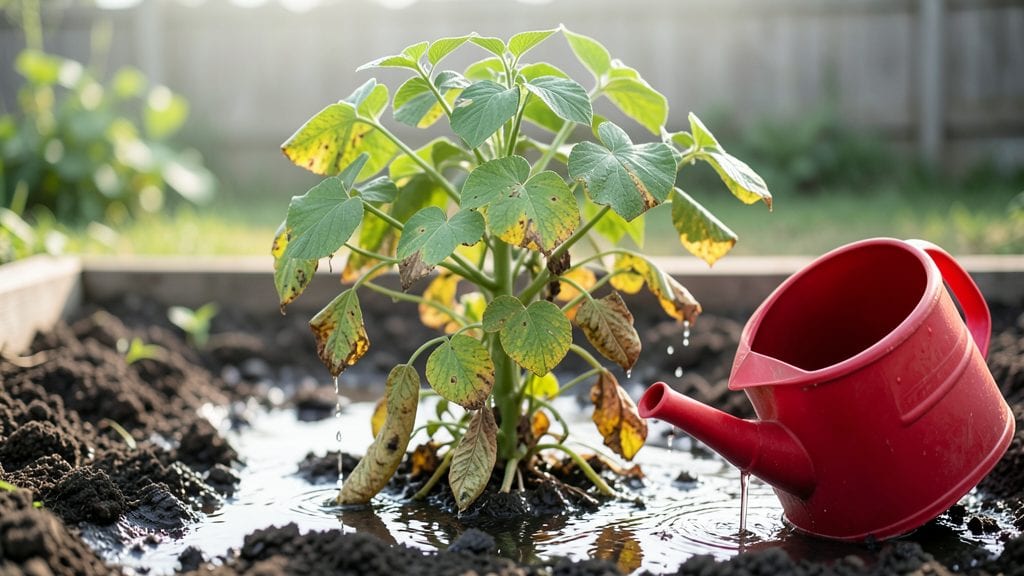
Your overwatered bean plants might look sad, but they’re actually begging for a drier home. Overwatered bean plants show up as yellowing leaves, limp stems, and roots that smell like swamp water—not the fresh, earthy scent of healthy soil.
I’ve saved more than a few struggling plants from this exact problem, and the fix is simpler than you’d think.
The root of the issue (pun intended) is usually too much moisture combined with poor drainage. Beans hate soggy feet just like we hate wet socks—it’s a recipe for rot. The good news? You can turn this around in 3 simple steps without losing your plants.
Start by checking the soil moisture with your finger: if it’s damp more than an inch down, hold off on watering. Then, improve drainage by adding perlite or sand to heavy soil or switching to containers with drainage holes.
Once you’ve adjusted the watering schedule, give your plants a chance to breathe. Trim any blackened roots and repot if needed, using a well-draining mix.
Within a week, you’ll notice new green growth pushing through, and those limp leaves will perk up like they’re getting a fresh cup of morning coffee. The key is consistency—beans prefer 1-1.5 inches of water per week, not daily sips.
To keep this from happening again, stick to a finger test before watering and avoid watering on a strict schedule. Beans are tough once they’re happy, and with the right care, you’ll be harvesting fresh pods in no time.
The next time you see those first little flowers, you’ll know you’ve got it right.
Common Causes Of Bean Plant Overwatering
If your bean plants are struggling from too much water, it’s often due to a mix of well-intentioned gardening habits and environmental factors. Understanding the root causes—literally—helps you adjust your approach and save your plants. Here’s why it happens, broken down into clear, actionable reasons:
Beans thrive in well-draining soil, but soggy conditions suffocate roots by cutting off oxygen. Common culprits include:
- Clay-heavy soil: Holds water like a sponge, leaving roots waterlogged for days. Test your soil’s drainage by filling a jar with soil and water—if it takes more than 30 minutes to drain, amend it with compost or sand.
- Compacted soil: Foot traffic, heavy rain, or poor tilling compresses soil, preventing water from seeping away. Loosen the top 6 inches with a fork or cultivator before planting.
- No raised beds or containers: Flat-ground planting traps excess water. If your garden floods easily, opt for elevated beds or pots with drainage holes.
Pro tip: 💡 Mix in perlite or coconut coir (10–20%) to improve aeration without altering soil fertility.
Beans need consistent moisture, but daily watering—especially in humid climates—drowns roots faster than you’d think. Key mistakes:
- Ignoring weather conditions: Rain + your watering routine = double the moisture. Use a rain gauge or skip watering if soil is already damp.
- Light, frequent watering: Shallow soaks encourage roots to stay near the surface, where they’re more prone to rot. Instead, water deeply 1–2 times per week (or less in rain).
- Automatic sprinklers on a timer: These often run too long or water foliage (which spreads disease). Switch to drip irrigation or soaker hoses for targeted root-level hydration.
Test your technique: 🌡️ Stick your finger 2 inches into the soil—if it’s moist, wait. If dry, water until moisture reaches 6 inches deep.
Potted beans are especially vulnerable because containers lack natural drainage pathways. Watch for these red flags:
- No drainage holes: Water pools at the bottom, creating anaerobic (oxygen-free) zones where roots suffocate. Drill holes if missing—4–6 per 5-gallon pot is ideal.
- Overpotting: Huge containers hold excess water for weeks. Match pot size to plant maturity: 5–7 gallons for bush beans, 10+ gallons for pole beans.
- Cheap, non-porous materials: Plastic and glazed ceramic trap moisture. Opt for terracotta, fabric pots, or unglazed ceramic for better airflow.
Fix it fast: ✨ Empty excess water from saucers within 30 minutes of watering to prevent root rot.
Even with perfect watering habits, nature can throw a wrench in your plans. Adjust for these:
- High humidity: Slow evaporation means soil stays wet longer. In tropical climates, water every 3–4 days instead of daily.
- Shade or dense mulch: Blocks sunlight, which speeds up evaporation. Thin mulch to 1–2 inches and ensure plants get 6+ hours of sun.
- Heavy, prolonged rain: Can saturate soil for days. Move containers to dry ground or cover beds with a clear tarp to shield plants temporarily.
Monitor with tech: 🎯 Use a soil moisture sensor (like the AcuRite Soil) to track real-time moisture levels.
Revive Your Bean Plants Now
Overwatered bean plants can feel like a lost cause, but with the right steps, you can nurse them back to health—even if their roots are drowning in soggy soil. The key is acting fast, adjusting care, and giving them the right conditions to recover.
Below, we’ll break down the fixes based on the most common causes of overwatering, along with prevention tips to keep your beans thriving long-term.
If your bean plants are sitting in waterlogged soil, the first step is to stop watering immediately. Excess moisture suffocates roots, cutting off oxygen and inviting fungal diseases like root rot. Here’s how to fix it:
- 🔥 Drain the excess water:
- Gently remove the plant from its pot or container and let it sit in a well-ventilated area for a few hours to air out.
- If planted in the ground, avoid watering for at least 3–5 days to allow the soil to dry out.
- 🍳 Repot if needed:
- If the soil is compacted or smells sour, replace it with a well-draining potting mix (add perlite or sand for better aeration).
- For in-ground plants, loosen the soil around the roots with a fork to improve drainage.
- ⏰ Wait before watering again:
- Stick your finger 1–2 inches into the soil—if it’s still damp, wait another day or two.
- Once dry, water only when the top inch of soil feels dry.
💡 Pro Tip: If your beans are in a pot, ensure it has drainage holes. No holes? Drill them or switch to a container with them!
Overwatered beans often show signs like yellow leaves, drooping stems, or blackened spots. This usually means the roots are struggling to absorb nutrients due to poor oxygen. Here’s how to revive them:
- 🌡️ Adjust humidity and airflow:
- Move the plant to a bright, indirect spot (avoid direct sun, which can stress already weak plants).
- Use a fan on low for a few hours daily to improve air circulation around the leaves.
- 🎯 Trim damaged foliage:
- Snip off yellow or mushy leaves with clean scissors to redirect energy to healthy growth.
- Avoid pruning more than 20–30% of the plant at once.
- ✨ Fertilize lightly (if needed):
- Wait until the plant shows new signs of life, then use a balanced, water-soluble fertilizer (like 10-10-10) diluted to half strength.
- Avoid fertilizing if the roots are still rotting—it can worsen the problem.
💡 Pro Tip: If your beans are in a humid climate, water in the morning so leaves have time to dry out before nightfall.
Overwatering creates the perfect breeding ground for fungi like Pythium or Phytophthora, which cause root rot. If you spot mold, slimy roots, or white fuzz, act quickly:
- 🔪 Remove infected roots:
- Rinse the roots gently under cool water to remove excess soil.
- Trim away black, mushy, or foul-smelling roots with sterilized scissors.
- 🌡️ Treat with fungicide:
- Spray the roots and soil with a copper-based fungicide or mix 1 tsp baking soda + 1 quart water (for mild cases).
- Replant in sterilized soil or a fresh potting mix.
- 🚫 Prevent future outbreaks:
- Avoid watering the leaves (use drip irrigation or water at the base).
- Rotate pots to ensure even airflow and sunlight exposure.
💡 Pro Tip: For severe cases, consider hydrogen peroxide (3%) as a root soak (1 part H₂O₂ to 10 parts water) to kill fungi before replanting.
Once your beans are on the mend, keep them healthy with these habits:
- ⏰ Water deeply but infrequently: Bean plants prefer dry spells between waterings. Aim for 1–1.5 inches per week (adjust for climate).
- 📊 Check soil moisture: Use a moisture meter or the finger test—never water on a schedule.
- 🌱 Choose the right container: Ensure pots have drainage holes and use lightweight, fast-draining soil mixes.
- 🌡️ Monitor weather: Reduce watering during rainy seasons or high humidity.
With patience and the right adjustments, your bean plants can bounce back stronger than ever. The key is acting fast and giving them the space to recover!
Frequently asked questions
Why do my bean plant leaves turn yellow when overwatered?
Yellowing leaves are your bean plants' SOS signal for too much moisture. Overwatering blocks oxygen from reaching roots, causing them to suffocate and release nutrients into the soil. This nutrient overload makes leaves turn yellow while stems stay green—a classic sign of overwatering rather than nutrient deficiency.
How often should I water beans to avoid drowning them?
Beans prefer 1-1.5 inches of water per week, delivered deeply but infrequently. Check soil moisture by sticking your finger 1-2 inches down—water only when dry. In hot climates, you might need daily light watering, but in cooler weather, every 3-4 days is better. Containers dry faster than ground soil.
Can I save a bean plant with root rot from overwatering?
Yes, but act fast! First, remove the plant and trim all black, mushy roots with sterilized scissors. Soak healthy roots in a 1:10 hydrogen peroxide solution for 10 minutes, then repot in fresh, well-draining soil. Avoid watering for 3-5 days to let roots recover. For severe cases, consider propagating from healthy stems.
What's the best soil mix to prevent overwatering?
Use a 50/50 mix of potting soil and perlite or coarse sand for optimal drainage. For containers, add 10-20% coconut coir to improve aeration. Avoid garden soil—it compacts easily and holds too much moisture. If your soil drains slowly (test by filling a jar with water), amend it with compost or vermiculite.
Will my bean plants recover if I just stop watering them?
Not necessarily—stopping watering alone won't fix established problems. The roots need time to dry out and recover, but you must also improve drainage and airflow. After halting watering, wait until the top 2 inches of soil are dry before resuming with deep, infrequent watering. Monitor for new growth within 7-10 days.