Pruning
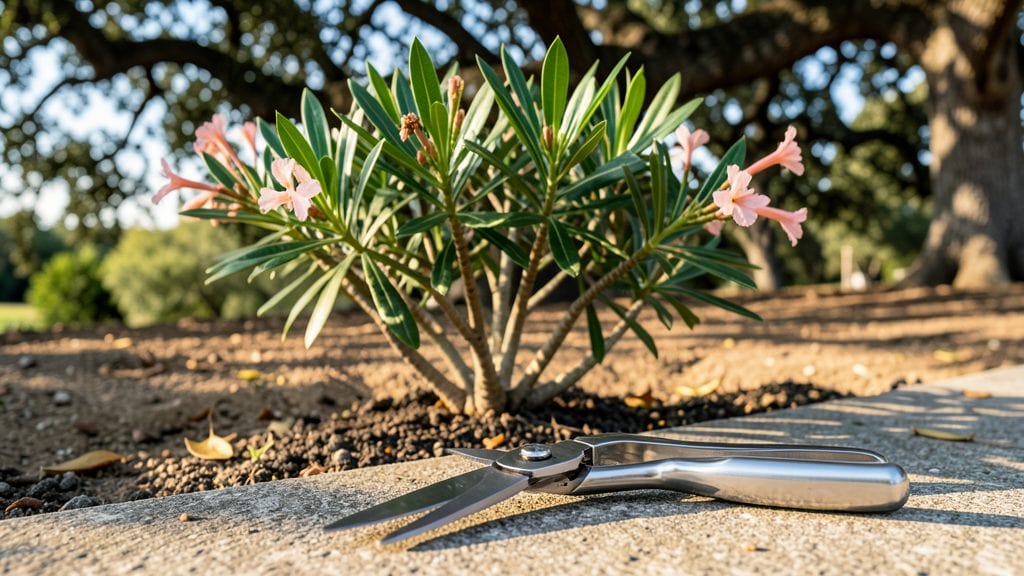
Pruning oleander plants isn’t just about shaping—it’s the secret to keeping those bold pink and white blooms coming back all season long. ✨ I’ve learned that skipping this step means fewer flowers and leggy growth, but a few well-placed cuts transforms oleanders from scraggly bushes into showstopping shrubs that bloom from spring through fall.
The best time to prune is right after flowering, when new growth starts pushing out. You’ll need sharp bypass pruners, thick gloves (oleander sap is toxic), and a bucket of soapy water to clean your tools afterward.
The key technique? Cut just above a leaf node at a 45-degree angle—this encourages bushier growth and more blooms next season.
After pruning, give your oleander a deep watering to help it recover and feed it with a balanced fertilizer to support new growth. Within weeks, you’ll see fresh green shoots and buds forming for the next round of flowers.
The payoff? A plant that stays compact, blooms nonstop, and stays healthy year after year.
This method works for both young plants and mature shrubs, whether you’re shaping a small patio oleander or a towering hedge. Just remember: safety first—always wear gloves and avoid burning pruned branches, as the sap can irritate skin. Ready to give your oleander the pruning it deserves?
📚 In This Guide
- What you need
- Instructions
- Tips and common mistakes
- Wrapping up and next steps
What you need
- ● Pruning shears – Bypass pruners (sharp, 5–7-inch blades) for clean cuts on small stems.
- ● Loppers – Long-handled (20–24 inches) for thicker branches (1–2 inches in diameter).
- ● Gloves – Heavy-duty, chemical-resistant (oleander sap can irritate skin!).
- ● Disinfectant (70% isopropyl alcohol or bleach solution) – To sterilize tools between cuts and prevent disease.
- ○ Pruning saw – Optional but handy for very thick branches (3+ inches).
- ● Trash bags or bucket – For disposing of pruned branches (wear gloves!).
- ● Rake or broom – To clean up debris afterward.
- ● Hand pruners – For delicate trimming of small stems or deadheading.
- ● Ladder or stool – If your oleander is tall or bushy (safety first!).
- ● Plant food or fertilizer – Post-pruning boost for recovery (choose a balanced 10-10-10 or citrus-specific formula).
- ● Plant tie or twine – If you’re training new growth or shaping the plant.
- ● Safety glasses – Protects eyes from sap or debris.
Step-by-Step instructions for pruning oleander plants
Here’s how to keep your oleander blooming beautifully all season long—no green thumb required.
✂️ Step 1: Gather Your Tools and Inspect the Plant
Start by sharpening your pruning shears—dull blades crush stems and invite disease. I always wipe them down with rubbing alcohol first to sterilize. Oleander branches are tough, so clean cuts prevent jagged edges that slow healing. Look for dead, brown branches first—they’re the easiest to spot and should go first.
Next, scan the plant for any branches growing inward or crossing others. These compete for sunlight and air circulation, weakening the plant. Mark them with a finger or a piece of twine if you’re unsure which to cut. Healthy growth has a deep green color and firm texture—anything mushy or discolored is a no-go.
✂️ Step 2: Prune Dead and Overcrowded Branches
Cut dead branches back to the main stem or a healthy bud, making the cut at a 45-degree angle just above the growth point. This shape helps water run off instead of pooling. If you’re pruning a branch that’s thicker than your thumb, use loppers instead of shears to avoid tearing the bark.
For overcrowded branches, trim them back to where they’re spaced about 6-8 inches apart. This opens up the plant for better airflow and sunlight. Real talk: Don’t overdo it—oleanders are resilient, but you don’t want to remove more than one-third of the plant’s foliage at once. Too much pruning stresses the plant and can reduce blooms.
✂️ Step 3: Deadhead Spent Blooms for More Flowers
Once the flowers fade, pinch off the dead blossoms by snipping the stem just above the first set of healthy leaves or buds. This encourages the plant to redirect its energy into producing new flowers instead of seeding. I like to do this in the morning when the plant is hydrated—it recovers faster from the slight stress of pruning.
Watch for new flower buds forming along the stems. These look like tiny green clusters. If you see them, leave the stem intact—cutting it back would remove potential blooms. Oleanders bloom on old wood, so avoid heavy pruning in late summer if you want fall flowers. The key is to keep the plant balanced and encourage continuous blooming.
✂️ Step 4: Shape the Plant and Encourage Bushier Growth
Now’s the time to give your oleander its signature shape. Cut back the longest branches to encourage bushier growth, trimming them to just above a leaf node or bud. This ensures the plant grows fuller rather than leggy. For a more formal look, trim the outer branches slightly to maintain a rounded shape.
If your oleander has grown too tall or leggy, you can also prune the top growth to promote branching lower down. Just make sure to leave at least 3-4 sets of leaves on each branch you trim. This gives the plant enough energy to recover and grow new shoots. Avoid pruning in late fall or winter—oleanders need their energy to prepare for the next growing season.
💧 Step 5: Water and Fertilize After Pruning
Give your oleander a deep watering after pruning to help it recover. Water at the base, avoiding the leaves to prevent fungal issues. I usually water in the early morning so the plant has time to dry out during the day. Within 24 hours, you’ll see new growth starting at the pruned areas—that’s your sign the plant is happy and healing.
After pruning, feed your oleander with a balanced, slow-release fertilizer. I like to use a 10-10-10 formula in early spring and again after heavy pruning. This gives the plant the nutrients it needs to bounce back and produce more blooms. Avoid over-fertilizing, though—oleanders prefer lean soil and too much fertilizer can burn the roots.
Tips & tricks for perfect oleander plant pruning
Here's what I've learned from years of keeping oleanders blooming nonstop—these tricks make all the difference.
Pruning Angle Matters: That 45-degree angle in Step 2 isn't just for show—it's the secret to healthy healing. When you cut at this angle, water runs off the wound instead of pooling, which prevents rot. I like to practice on scrap wood first to get the angle just right before tackling the plant.
Timing is Everything: The 24-hour recovery period after pruning is crucial. This gives your oleander time to seal its wounds naturally. I've seen plants that didn't get this recovery time develop fungal issues. Watch for new growth within this window—it's your green light that everything's on track.
Don't Over-Prune: Remember that one-third rule from Step 2? I learned this the hard way after removing too much foliage and watching my oleander struggle to rebound. Oleanders are tough, but they have limits. If you're unsure, it's better to do light pruning now and more later than risking stressing the plant.
Seasonal Strategy: Late summer is prime time for fall blooms, but avoid heavy pruning then. Instead, focus on deadheading faded flowers throughout summer to encourage continuous blooming. I treat each season like a new chapter—spring for shaping, summer for deadheading, and fall for light maintenance.
Pro Tips for Oleander Plant Pruning
- Here's what I've learned from years of keeping oleanders blooming nonstop—these tricks make all the difference.
- Pruning Angle Matters: That 45-degree angle in Step 2 isn't just for show—it's the secret to healthy healing.
- Timing is Everything: The 24-hour recovery period after pruning is crucial.
Frequently asked questions
Got questions about pruning your oleander plant? You’re not alone! Here are some of the most common queries—and their straightforward answers—to keep your oleander thriving and blooming beautifully.
When is the best time to prune oleander for blooms?
The ideal time to prune oleander is late winter or early spring, just before new growth begins. This encourages fresh, vigorous blooms. Avoid heavy pruning in fall—it can stunt next year’s flowers. Light trimming to shape or remove dead branches can happen year-round, but save major cuts for the dormant season!
How much can I prune oleander without harming it?
Oleanders are tough and can handle up to one-third of their total height or volume in a single pruning session. For example, if your plant is 6 feet tall, you can safely trim up to 2 feet. Avoid over-pruning—this can stress the plant and reduce flowering. Focus on shaping, removing dead wood, and thinning crowded branches for airflow.
What should I do if my oleander stops blooming after pruning?
If your oleander skips blooms post-pruning, it might be due to over-pruning too late in the season or cutting back all the old wood (where flowers form). Try these fixes:
- Leave some mature stems uncut—they hold next year’s flower buds.
- Fertilize lightly with a balanced, phosphorus-rich formula to encourage blooms.
- Ensure it gets 6+ hours of sunlight daily—oleanders need plenty of light to flower.
Can I prune oleander for bonsai or topiary shapes?
Oleanders are highly adaptable to pruning for bonsai or topiary. Use sharp shears to trim new growth regularly (every 4–6 weeks) to maintain shape. For bonsai, prune roots lightly in spring and train branches with wire. Just remember: More frequent light pruning yields better results than occasional heavy cuts.
Is oleander sap toxic? Should I wear gloves when pruning?
Yes, oleander sap is highly toxic—even inhaling dust from pruning can cause irritation. Always:
- Wear gloves (nitrile or rubber) and long sleeves.
- Use safety goggles to avoid sap contact with eyes.
- Wash hands thoroughly after pruning and avoid touching your face.
- Dispose of clippings in sealed bags—never compost them.
Wrapping up and next steps
Pruning your oleander isn’t just about keeping it tidy—it’s your secret weapon for vibrant, year-round blooms! By mastering deadheading and strategic cuts, you’ll encourage lush growth, prevent pests, and enjoy a showstopper plant that thrives in any season. 🌸
Ready to transform your oleander into a blooming superstar? Grab your pruners and start clipping today! For extra confidence, revisit our FAQs or watch a quick tutorial—your plant (and your neighbors!) will thank you.