Pests and Diseases
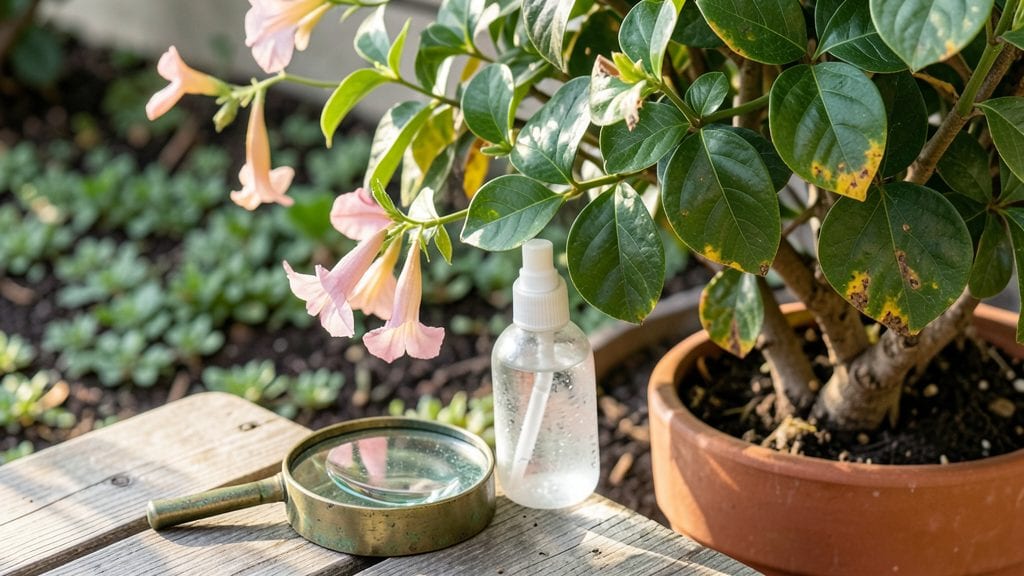
Mandevilla plant diseases can turn your vibrant tropical beauty into a sad, spotted mess if you don’t catch them early. I’ve seen healthy vines wither in weeks because of fungal infections—until I learned the subtle signs like yellowing leaves or sticky residue on stems.
The good news? Most issues start with simple fixes like adjusting watering or improving airflow, and I’ll show you exactly what to watch for.
Fungal problems thrive when Mandevillas get too wet or crowded, but they’re not always obvious. Powdery mildew looks like dust on leaves, while black spot creates dark, greasy patches that spread fast.
Root rot sneaks in silently, causing wilting even when the soil feels moist. The key is acting fast—once diseases take hold, even organic treatments can’t fully reverse the damage.
You’ll learn to tell diseases apart from pests or nutrient issues, so you don’t waste time on the wrong fixes. A quick spray of neem oil or baking soda mix can stop early infections, while pruning affected leaves keeps the plant strong.
With these steps, your Mandevilla stays lush and blooming instead of struggling.
This guide covers the 12 most common fungal issues, complete with visual clues and step-by-step solutions. Whether you’re dealing with a single leaf or a full plant crisis, you’ll know exactly how to respond. Let’s get your Mandevilla back to its best—and keep it that way all season.
Root Causes Of Mandevilla Struggles
Mandevilla plants may seem like low-maintenance tropical beauties, but they’re actually quite sensitive to their growing conditions. When diseases strike, it’s usually because their care routine has gone off track—or because unseen threats are lurking in their environment.
Let’s break down the real culprits behind fungal and bacterial infections in these stunning vines, so you can address the problem at its source.
Mandevillas thrive in well-draining soil, but when moisture lingers, it creates the perfect breeding ground for fungi like Phytophthora or Fusarium. Here’s why it happens:
- Compacted or clay-heavy soil doesn’t allow excess water to escape, suffocating roots and inviting rot.
- Overwatering (especially in cooler months) keeps the soil soggy, weakening the plant’s defenses.
- Lack of organic matter reduces soil aeration, trapping moisture and blocking oxygen flow to roots.
💡 Pro Tip: Test your soil’s drainage by digging a hole, filling it with water, and timing how long it takes to drain. If it’s slower than 30 minutes, amend with perlite, sand, or compost to improve airflow.
Fungal diseases like powdery mildew or leaf spot often spread via spores already present in the air, soil, or nearby plants. Here’s how they take hold:
- Humid conditions (70%+ humidity) give spores the moisture they need to germinate on leaves.
- Contaminated tools or potting mix can transfer pathogens from infected plants to healthy ones.
- Poor air circulation (e.g., crowded pots or indoor growing) traps spores near the plant, increasing infection risk.
✨ Prevention Hack: Sterilize pruners with rubbing alcohol between cuts, and avoid wetting foliage when watering. If growing indoors, use a small fan to improve airflow.
Mandevillas are tropical, but extreme or fluctuating temperatures weaken their immunity, making them vulnerable to diseases like bacterial blight or root rot. Key triggers include:
- Cold drafts or temperatures below 50°F (10°C) shock the plant, reducing its ability to fight infections.
- Heat stress (above 90°F/32°C) combined with high humidity can cause leaf burn and open wounds for pathogens.
- Sudden changes in light exposure (e.g., moving from shade to full sun) stresses the plant, lowering its disease resistance.
🎯 Quick Fix: Keep mandevillas in a stable environment—ideal temps are 60–85°F (15–29°C). If outdoors, move them to a sheltered spot during temperature swings.
A malnourished mandevilla is like an open invitation for diseases. Nutritional deficiencies (especially nitrogen, potassium, or magnesium) weaken cell walls, making them easier targets. Common deficiencies include:
| Deficiency | Symptoms | Disease Risk |
|---|---|---|
| Nitrogen (N) | Yellowing leaves (chlorosis), stunted growth | Increased susceptibility to leaf spot and powdery mildew |
| Potassium (K) | Brown leaf edges, weak stems | Higher risk of root rot and bacterial wilt |
| Magnesium (Mg) | Interveinal yellowing (between veins) | Reduced resistance to fungal infections overall |
💪 Fertilizer Fix: Use a balanced liquid fertilizer (10-10-10 or 20-20-20) every 4–6 weeks during growing season. For deficiencies, apply Epsom salt (magnesium) or a fish emulsion (nitrogen) as needed.
Sap-sucking pests like aphids, mealybugs, or scale insects don’t just steal nutrients—they also damage plant tissue, leaving wounds where fungi and bacteria can enter. For example:
- Aphids inject toxins that weaken leaves, making them prone to sooty mold (a fungal growth on honeydew).
- Mealybugs create sticky residue that traps moisture, promoting powdery mildew.
- Scale insects block stomata (leaf pores), disrupting gas exchange and stressing the plant.
🔥 Pest Control Tip: Inspect leaves regularly for sticky residue or cottony clusters. Treat infestations with neem oil or insecticidal soap, and isolate affected plants to prevent spread.
Quick Fixes for Mandevilla Plant Woes
When your Mandevilla’s vibrant blooms start fading or its leaves turn unrecognizable, it’s time to act fast! The good news? Most fungal issues are treatable with the right approach. Below, we’ve mapped out practical, step-by-step solutions for each common problem, plus prevention tips to keep your plant thriving.
Think of this as your Mandevilla’s emergency first aid kit—no green thumb required!
Cause: Cercospora or Alternaria fungi thrive in damp, humid conditions, creating dark spots with yellow halos. Fix It:
- 🔥 Trim the Damage Use sterilized pruners (wipe with rubbing alcohol) to snip off all infected leaves—don’t leave them on the plant or compost pile (they’ll spread spores). Dispose of them in a sealed bag.
- 🍳 Fungicide Spray (DIY or Store-Bought) - DIY Option: Mix 1 tsp baking soda + 1 quart water + a few drops of dish soap (so it sticks).
Spray undersides of leaves (where spores hide!) every 7–10 days for 2 weeks. - Store-Bought: Use a copper fungicide (like Bordeaux mixture) or a neem oil spray (1% concentration). Follow label instructions—always apply in the morning to avoid burning leaves.
- 🌡️ Improve Airflow & Light
- Move your Mandevilla to a sunnier spot (6+ hours of direct light) or near a fan (gentle breeze = less humidity).
- Space plants 12+ inches apart to reduce crowding.
💡 Pro Tip: Water at the base, not overhead—morning watering lets leaves dry by nightfall, deterring fungi.
Cause: Erysiphe fungus coats leaves in a chalky white layer, blocking sunlight and stunting growth. Fix It:
- 👨🍳 Scrub Gently Dip a soft cloth in mild soapy water (1 tsp dish soap per gallon) and wipe off the powdery film. Repeat 2–3 times for severe cases.
- ⏰ Prune & Isolate Remove heavily infected stems (they won’t recover). Place the plant in quarantine (away from other houseplants) until fully treated.
- 🎯 Spray with Fungicide
- DIY: 1 tbsp hydrogen peroxide (3%) + 1 quart water. Spray every 5 days until clear.
- Store-Bought: Sulfur-based fungicides (like Safer Garden Fungicide) work well—apply at dusk to avoid leaf burn.
💡 Pro Tip: Prevent recurrence by watering early in the day and avoiding overhead sprinklers.
Cause: Phytophthora or Pythium fungi rot roots in overwatered, soggy soil. Fix It:
- 🔪 Emergency Root Rescue
- Remove the plant from its pot and gently rinse roots in water to wash away soil.
- Trim black/mushy roots with sterilized scissors. Healthy roots are firm and white.
- Soak roots in fungicide (like Mycorrhizal fungi treatment or hydrogen peroxide 3% for 10 mins) to kill spores.
- 🥘 Repot in Fresh Mix
- Use a well-draining pot (terracotta or one with drainage holes).
- Soil recipe: 60% cactus/succulent mix + 30% perlite + 10% orchid bark.
- Add a fungicide (like Benlate) to the soil before repotting.
- 🌱 Adjust Watering Habits
- Wait until the top 1–2 inches of soil are dry before watering.
- Bottom-water (place pot in a tray of water for 10 mins, then drain).
💡 Pro Tip: Never let Mandevilla sit in saucers—empty excess water within 30 mins.
Cause: Xanthomonas bacteria create water-soaked, yellowing spots that ooze. Fix It:
- ⚠️ Quarantine Immediately Bacterial diseases spread fast—move the plant far from others and avoid touching healthy plants after handling it.
- 🧼 Sterilize Everything
- Wash hands with soap.
- Clean pruners with bleach (1 part bleach:10 parts water) or rubbing alcohol.
- Disinfect surfaces (tables, pots) with 70% isopropyl alcohol.
- 🔪 Prune & Dispose Cut off all infected leaves/stems (don’t compost them—bag and trash). For severe cases, the plant may need to be destroyed to prevent spread.
- 💦 Adjust Care
- Reduce humidity (use a dehumidifier or increase airflow with a fan).
- Avoid overhead watering—use a drip irrigation system or water at the base.
💡 Pro Tip: Copper-based bactericides (like Copper Soap) can help, but prevention is key—sterilize tools and avoid splashing water.
Want to avoid these diseases long-term?
Follow this easy maintenance routine: - ✅ Light: 6+ hours of bright, indirect light (south or west-facing windows). - ✅ Water: Once a week (check soil moisture—stick your finger in!). - ✅ Airflow: Gentle breeze (place near a fan or open window). - ✅ Cleanliness: Wipe leaves monthly with a damp cloth to remove dust/spores. - ✅ Soil: Repot every 2 years in fresh, well-draining mix. - ✅ Tools: Sterilize pruners after each use (bleach or alcohol).
Final Thought: Most Mandevilla diseases are manageable—the key is early action and consistent care. Once you spot the first signs, act fast, and your plant will bounce back with bold, healthy blooms in no time! 🌸
Frequently asked questions about Mandevilla plant diseases
What are the first signs my Mandevilla has a fungal disease?
Watch for dark spots with yellow halos (leaf spot) or white powdery coatings (mildew) on leaves. Early wilting or yellowing between veins can also signal root rot or nutrient stress. Check undersides of leaves—spores often hide there first.
Can I save a Mandevilla with root rot?
Yes, but act fast! Trim all mushy roots, repot in sterile, well-draining mix, and avoid watering for 5-7 days to let roots recover. Add a fungicide to the soil and use terracotta pots (they wick away moisture). Severe cases may need pruning back to healthy growth.
Why does my Mandevilla get diseases even with proper care?
Diseases often spread from contaminated tools, nearby infected plants, or hidden pests like mealybugs. Even with good care, spores linger in soil or air. Sterilize pruners between cuts, isolate new plants for 2 weeks, and check leaves regularly for sticky residue (a pest warning sign).
Is neem oil safe for treating Mandevilla diseases?
Yes! Neem oil is organic and effective against fungal/bacterial issues. Mix 1 tsp per quart of water with a drop of dish soap, then spray every 7-10 days (morning applications only). Avoid spraying blooms—it may harm pollinators. Test on a small leaf first for sensitivity.
How do I know if my Mandevilla has a bacterial infection vs. fungal?
Bacterial spots are watery, yellow, and often ooze when pressed, while fungal spots are dry with defined edges. Bacterial diseases spread faster and may cause wilting stems. Fungal issues often appear as powdery coatings or greasy-looking patches. Quarantine immediately if you see oozing!