Pruning
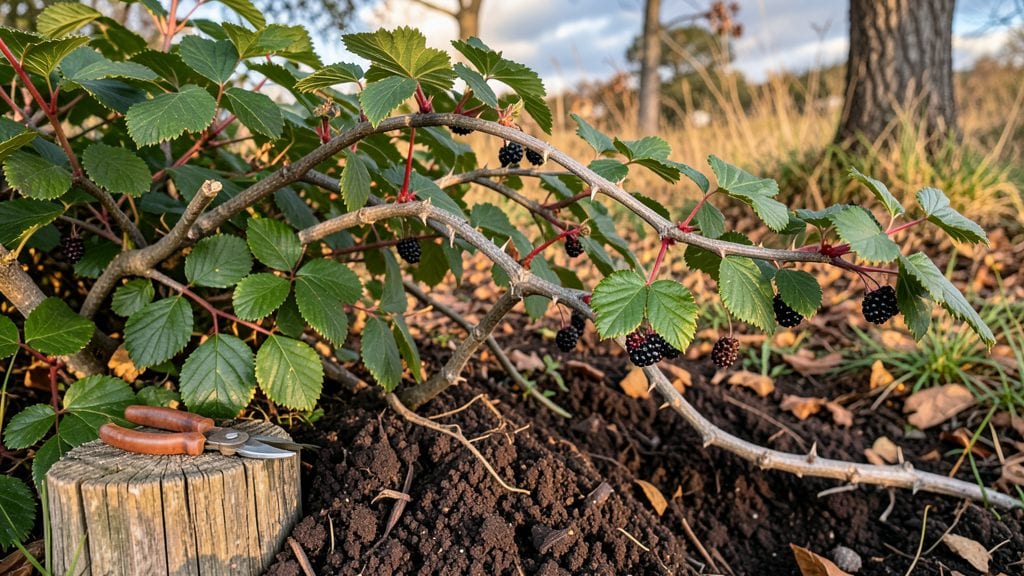
Pruning blackberry plants transforms a tangled mess into a productive powerhouse—just three well-timed cuts can double your harvest and keep your bushes healthy for years. I’ve spent years wrestling with overgrown canes, and these simple techniques finally made sense of the chaos.
The key is understanding when to prune (and when to leave them alone), because cutting at the wrong time means fewer berries next season.
You’ll need basic tools: sharp pruning shears, heavy-duty gloves (thorns are no joke), and a bucket for clippings. Thornless varieties make the job easier, but traditional blackberries require extra care to avoid snagging yourself. The real secret?
Pruning in late winter or early spring—right before new growth starts—sets the stage for strong canes and heavy fruit production. I’ve seen bushes go from scraggly to showstopping in just one season with this approach.
After pruning, your plants will reward you with thick, upright canes covered in fruit by summer. The berries grow bigger, ripen faster, and the bushes stay disease-free because you’re removing old, weak growth.
You’ll know you’ve done it right when you see fresh green shoots emerging within weeks of your cuts—proof that your blackberries are ready for their best season yet.
This method works for both homestead plots and small backyard gardens, whether you’re growing primocanes (summer-bearing) or floricane (fall-bearing) types. The same principles apply, just adjusted for your variety’s fruiting cycle. Let’s get those shears sharp and turn last year’s tangled mess into this year’s berry bonanza.
📚 In This Guide
- What you need
- Instructions
- Tips and common mistakes
- Wrapping up and next steps
What you need
- ● Pruning shears (secateurs): 1 pair (bypass-style, sharp, and disinfected—sterilize with rubbing alcohol or bleach between cuts to prevent disease).
- ● Loppers: 1 pair (for thicker canes, 8–12 inches long with comfort-grip handles).
- ● Hand pruners: 1 pair (for precision cuts on smaller canes, ergonomic design recommended).
- ● Gloves: 1 pair (cut-resistant and gardening-specific to protect hands from thorns and debris).
- ● Disinfectant solution: Small bottle (e.g., 1 part bleach to 9 parts water or rubbing alcohol).
- ● Rake or hoe: 1 (for clearing debris and loosening soil around the base).
- ● Heavy-duty trash bags: 2–3 (for disposing of pruned canes—blackberries can harbor pests).
- ● Pruning saw: 1 (for extra-thick canes that shears can’t handle).
- ● Ladder: 1 (if your blackberry patch is tall or sprawling).
- ● Markers or flags: Small stakes or colored tape (to tag canes for future reference, like primocanes vs. floricanes).
- ● Compost bin: Nearby (to repurpose pruned canes as mulch—they’re nutrient-rich!).
- ● Sunscreen & hat: (Because pruning in the sun? Yes, please—but stay protected!).
Instructions for blackberry plant pruning: year-round vigor with 3 strategic cuts
Here's how to keep your blackberries thriving through every season with just three focused cuts.
Late Winter Dormant Pruning for Structure
Start in late winter while plants are still dormant, but before buds begin to swell. This is the most critical cut of the year. Using sharp pruning shears, remove all dead, diseased, or weak canes—you'll know these by their hollow centers or dark, mushy spots. Cut these back to the ground completely; they won't produce fruit and can harbor pests.
Next, identify the strongest canes from last year's growth. These will be the thickest, with smooth bark and a healthy green color when scratched. Retain only 4-6 of these prime canes per plant, cutting the rest at the base. This ensures energy focuses on fruit production rather than excessive growth. Here's the thing—if you leave too many canes, you'll get smaller berries and more crowding.
Summer Thinning for Airflow and Fruit Quality
Mid-summer is when you'll do your second cut, about 6-8 weeks after flowering. Look for canes that are growing too densely together—they'll compete for sunlight and air circulation. Thin these out by cutting them back to the ground, leaving at least 12 inches of space between remaining canes. This prevents fungal diseases like botrytis, which thrives in humid, shaded conditions.
While you're at it, trim any side shoots that form on the main canes back to 12-18 inches from the ground. These shoots steal energy from the main fruit-bearing canes. You'll see a noticeable difference in berry size and plant health after just one summer of thinning. Real talk: Skipping this step means smaller harvests and more pests.
Post-Harvest Renewal Pruning for Next Year
After your main harvest season, when most canes have fruited and turned brown, it's time for your final cut. Remove all the old fruiting canes—these are the ones that produced berries this year. They're done for the season and won't fruit again. Cut them at the base, leaving only the new, green canes that emerged this spring. These will become next year's fruit producers.
While you're working, give the plant a quick inspection for any suckers growing from the roots. These are the thin, fast-growing shoots that pop up around the base. Cut these off at the ground level—they'll only compete with your main canes for nutrients. This final pruning keeps your blackberry patch clean and ready for next year's growth cycle.
Tips & tricks for perfect blackberry plant pruning
These three strategic cuts will transform your blackberry patch from overgrown to thriving—here's how to get it right every time.
Tool Preparation: Before you begin, make sure your pruning shears are sharp and clean. Dull blades tear plant tissue rather than making clean cuts, which can invite disease. I like to disinfect my shears with rubbing alcohol between cuts, especially when removing diseased canes in Step 1. This prevents spreading pathogens to healthy parts of the plant. Between us, I've seen entire patches ruined by using the same shears on diseased and healthy canes without cleaning them first.
Identifying Healthy Canes: In Step 1, when selecting your 4-6 strongest canes, look for ones with smooth bark and no visible damage. Scratch the bark—healthy canes will have green underneath, while weak canes will show brown or yellow. I've learned this the hard way after keeping canes that looked promising but turned out to be compromised. The 4-6 cane limit might feel restrictive, but trust me on this: fewer canes mean bigger, sweeter berries and less competition for resources.
Seasonal Timing is Everything: The 6-8 week window after flowering in Step 2 is crucial for summer thinning. If you wait too long, those side shoots will have grown too large to trim effectively. I mark my calendar with the first flowering date and set a reminder for 8 weeks later. This timing prevents fungal diseases by improving airflow exactly when blackberries are most vulnerable to humidity. Don't make my mistake of skipping this step—your harvest will thank you with noticeably larger berries.
Post-Pruning Care: After completing all three cuts, give your blackberry patch a good watering to help it recover. The roots will be exposed during the post-harvest pruning, so proper hydration is essential. I also recommend applying a balanced fertilizer after pruning to replenish nutrients. This final step sets your plants up for strong new growth next season, ensuring you'll have plenty of canes to fruit from in the future.
Pro Tips for Blackberry Plant Pruning
- These three strategic cuts will transform your blackberry patch from overgrown to thriving—here's how to get it right every time.
- Tool Preparation: Before you begin, make sure your pruning shears are sharp and clean.
- Identifying Healthy Canes: In Step 1, when selecting your 4-6 strongest canes, look for ones with smooth bark and no visible damage.
Frequently asked questions
Got questions about pruning your blackberry plants? You’re not alone! Here are some of the most common concerns—and their straightforward solutions—to keep your bushes thriving.
When is the best time to prune blackberry plants?
Prune after harvest (late summer/fall) for floricanes (last year’s canes that bore fruit), and early spring (before buds swell) for primocanes (current year’s growth). Ever-bearing varieties may need a third light trim in late winter to shape the plant. Avoid pruning in extreme cold or heat.
How do I tell the difference between primocanes and floricanes?
Floricanes are woody, brown, and last year’s canes (they fruited in summer). Primocanes are green, flexible, and current year’s growth (they’ll fruit next season). Cut floricanes to the ground after harvest; leave primocanes until spring. Pro tip: Label canes with flags if you’re unsure!
What if I prune at the wrong time?
Pruning too early (before harvest) removes next year’s fruit. Late pruning (fall/winter) can expose canes to cold damage or pests. If you’ve already pruned wrong, don’t panic! Just focus on spring cleanup—remove dead/diseased canes and adjust future timing. Blackberries are resilient!
Can I prune blackberries without cutting canes to the ground?
Yes! For renewal pruning, cut floricanes to 6–12 inches tall instead of the ground to encourage bushier growth. This works well for trailing varieties or small spaces. Just leave 2–3 strong primocanes per plant for next year’s fruit. Balance is key!
Why are my blackberries not fruiting after pruning?
Lack of fruit often means too much primocane removal or over-pruned floricanes. Ensure you leave at least 2–3 healthy primocanes (current year) and 1–2 floricanes (last year) per plant. Check for pests/disease (like cane borers) or nutrient deficiencies (add compost or fertilizer in spring).
Wrapping up and next steps
Mastering the art of blackberry plant pruning is your ticket to a bountiful harvest year after year! 🌱 By focusing on the three strategic cuts—winter dormancy, spring renewal, and summer maintenance—you’ll keep your plants healthy, productive, and pest-resistant.
Remember, consistency is key, so grab those pruners and give your berries the care they deserve.
Ready to take the next step? Start small—pick one season’s pruning tasks to practice, then gradually build your confidence. Before you know it, you’ll be the proud gardener of a thriving blackberry patch! 🍇✨