Pruning
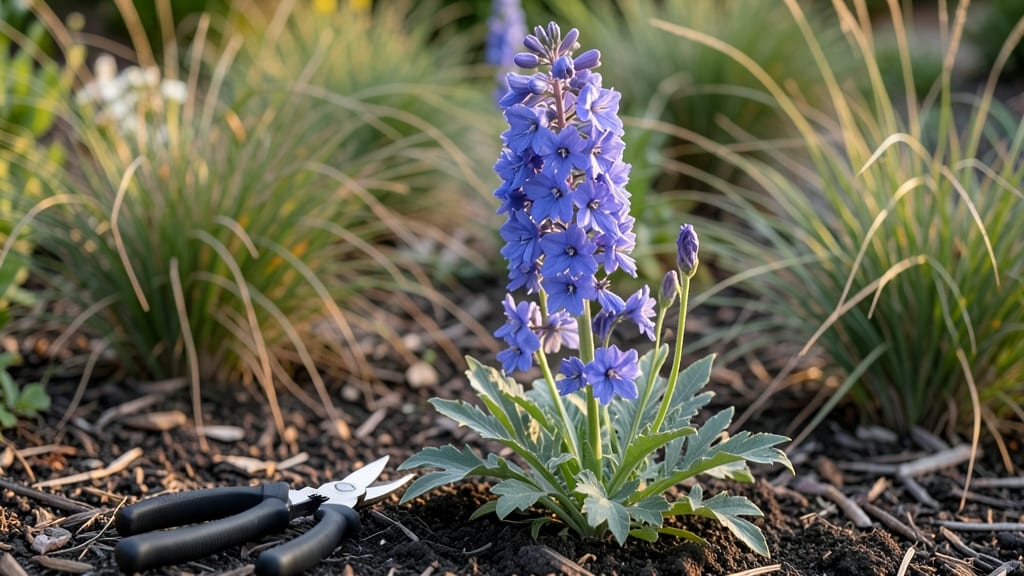
Pruning delphinium plants transforms those gangly stems into a summer-long fountain of blooms—if you do it right. ✨ I learned the hard way that cutting back too late or too aggressively turns your towering delphiniums into sad, leggy shadows instead of the dramatic centerpieces they should be.
The key is timing and technique: deadhead spent blooms immediately, then prune back by half after the first flush of flowers. You’ll need clean pruners and a sunny afternoon to avoid shocking the plant.
Most gardeners stop there, but I’ve found that a second light trim in early fall—just before frost—keeps next year’s stems sturdy and strong.
When done properly, your delphiniums will rebound with bold, new growth within weeks. The stems stay thick, the blooms multiply, and you’ll have those showstopping spikes all summer long. The secret isn’t just cutting—it’s knowing when to stop.
Works for both cottage gardens and containers, and the same method applies to delphiniums grown from seed or transplants. Here’s exactly how to make it happen without turning your plants into overgrown weeds.
📚 In This Guide
- What you need
- Instructions
- Tips and common mistakes
- Wrapping up and next steps
What you need
- ● Sharp bypass pruners – Choose bypass-style (not anvil) for clean cuts; opt for 4- to 6-inch blades for precision.
- ● Clean, sterilized shears – Disinfect with 70% isopropyl alcohol or a 10% bleach solution to prevent disease spread.
- ● Gloves – Nitrile or leather (thick enough to protect against thorns).
- ● Garden twine or plant ties – 1/4-inch wide (for staking tall stems post-pruning).
- ○ Pruning saw (optional) – Only if dealing with thick, woody stems (rare in delphiniums but useful for stubborn growth).
- ● Dry, sunny day – Avoid pruning after rain to minimize fungal risks.
- ● Compost bin or brown paper bag – For collecting pruned debris (don’t compost diseased stems!).
- ○ Balanced fertilizer (optional) – 10-10-10 or 5-10-10 NPK (1 tbsp per plant) to replenish nutrients after pruning.
- ● Stakes or cages – 5- to 6-foot tall (if your delphiniums are floppy post-prune).
Instructions for pruning delphinium plants to encourage nonstop blooms
Here’s the simple method I use to keep my delphiniums flowering heavily all season long.
✂️ Step 1: Identify and Remove Spent Blooms
Start by pinching off faded flowers at the base of the stem, just above a set of leaves. Delphiniums bloom in clusters, so you’ll often need to trim back an entire stem if most flowers in that section have wilted. Use sharp, clean pruners to avoid crushing stems—crushed tissue invites disease.
I know it feels counterintuitive to cut off blooms, but this redirects the plant’s energy into producing new flowers instead of seed pods. Watch for stems that look hollow or have dried-up blooms—they’re ready for removal. Never leave more than 2 inches of stem above the leaf node when pruning.
✂️ Step 2: Prune Leggy or Overgrown Stems
After the first flush of blooms, some stems may stretch tall and spindly with fewer flowers. Cut these back by one-third of their length to encourage bushier growth. Always cut just above a leaf node where new growth can emerge—never leave a stub.
This is where delphiniums show their resilience. Even if a stem looks sad and overgrown, cutting it back often triggers a second wave of blooms. I like to do this in stages—never prune more than 30% of the plant at once, or you’ll shock it into dormancy.
🌿 Step 3: Thin Crowded Stems for Better Airflow
Delphiniums naturally produce multiple stems from the base. If you have more than 4-5 strong stems emerging, thin the weakest ones at the base. This prevents overcrowding, which spreads fungal diseases like powdery mildew.
Use your fingers to gently twist off unwanted stems rather than cutting—the roots are shallow, and you don’t want to disturb the remaining plants. After thinning, water at the base to help the remaining stems establish stronger roots. You’ll notice the remaining stems thicken and produce even taller, sturdier blooms.
⏰ Step 4: Schedule Pruning for Peak Performance
Time your pruning right for continuous blooms. Deadhead spent flowers immediately after they fade, but avoid heavy pruning during the hottest part of summer—delphiniums need energy to recover. Instead, focus on removing faded blooms and thinning stems in early morning or late afternoon.
By late summer, you can do a final light pruning to remove any remaining spent blooms. This gives the plant a clean finish and helps it store energy for next year. I always leave the foliage until it naturally yellows—delphiniums feed nutrients back into their roots through the leaves.
💧 Step 5: Support and Care After Pruning
After pruning, stake any tall stems that need support—delphiniums can grow 4-6 feet tall and need stability, especially after heavy rain. Water deeply at the base every 2-3 days until new growth appears, then taper to once a week once established.
Delphiniums reward attentive pruning with dramatic reblooms. Within 2-3 weeks of proper pruning, you’ll see fresh buds forming at the stem tips. Keep an eye out for new growth—it’s your sign that the plant is responding well.
Tips & tricks for pruning delphinium plants
Delphiniums reward precise pruning with continuous blooms—here’s how to avoid common mistakes and maximize those towering stems.
Tool Tip: Always use sharp pruners or your fingers to twist off stems—never tear or crush the tissue. Dull tools cause jagged cuts that invite disease, and crushed stems can’t regenerate properly. I keep a small pair of clean pruners dedicated just to my delphiniums to prevent cross-contamination with other plants.
Visual Cue for Step 1: In Step 1, look for stems that feel hollow when you gently squeeze them—they’re ready for removal. Also watch for flower clusters where more than half the blooms have faded. These are your signals to prune, not just individual wilting flowers. Remember the 2-inch rule: leave just enough stem above the leaf node so new growth can emerge.
Pruning Strategy: When you’re cutting back overgrown stems in Step 2, focus on making clean cuts just above a leaf node. This is where new growth will emerge. I like to mark the cut line with my finger first to visualize where the new growth will start—this ensures I don’t accidentally leave a stub that could rot. Never remove more than 30% of the plant at once, even if it looks unruly.
Seasonal Timing: The early morning or late afternoon timing in Step 4 is crucial—this prevents stressing the plant during peak heat. I’ve found that pruning right after sunrise gives the plant time to recover before the midday heat hits. For late summer pruning, wait until after the first frost warning has passed, but before the first hard freeze. This gives your delphiniums time to store energy for next year’s blooms.
Pro Tips for Pruning Delphinium Plants
- Delphiniums reward precise pruning with continuous blooms—here’s how to avoid common mistakes and maximize those towe...
- Tool Tip: Always use sharp pruners or your fingers to twist off stems—never tear or crush the tissue. Dull tools caus...
- Visual Cue for Step 1: In Step 1, look for stems that feel hollow when you gently squeeze them—they’re ready for remo...
Frequently asked questions
Got questions about keeping your delphiniums thriving with the perfect prune? Here are some of the most common ones—and their answers!
When is the best time to prune delphiniums for more blooms?
Prune delphiniums after they finish flowering in early summer (usually June-July). Cut back spent blooms to just above a set of healthy leaves or buds. This encourages a second flush of flowers! Avoid pruning too late in the season—waiting until fall can weaken the plant before winter.
Should I cut delphiniums all the way down to the ground?
No—never cut them all the way down! Delphiniums store energy in their basal leaves and lower stems. Trim spent blooms to 4–6 inches above the ground or to a healthy leaf node. This preserves the plant’s strength for next year’s growth while still promoting new blooms.
Can I prune delphiniums in rainy or humid weather?
Avoid pruning during wet conditions to prevent fungal diseases like powdery mildew. Wait for a dry, sunny day to trim. If you must prune after rain, sterilize your shears with rubbing alcohol first and allow the cuts to dry before watering the plant again.
What if my delphiniums don’t rebloom after pruning?
Several factors could be at play:
- Over-pruning: Leaving too little foliage weakens the plant.
- Poor soil/nutrients: Feed with a balanced fertilizer after pruning.
- Insufficient sunlight: Delphiniums need 6+ hours of sun daily.
- Drought stress: Keep soil consistently moist but not soggy.
Do I need to prune delphiniums every year?
Yes! Annual pruning keeps delphiniums healthy and blooming. In mild climates, you can also do a light trim in late winter to remove dead growth before new shoots emerge. In colder zones, wait until spring to avoid frost damage.
Wrapping up and next steps
Pruning your delphinium plants doesn’t have to be intimidating—with the right techniques, you’ll enjoy towering blooms all summer long! 🌸 The key is timing, patience, and regular deadheading to encourage new growth and prevent leggy stems.
Whether you’re a beginner or a seasoned gardener, a little effort now means a showstopping display later.
Ready to transform your garden? Grab your pruners and start pruning today—your delphiniums will thank you with vibrant, long-lasting flowers! For extra inspiration, check out our step-by-step guide or explore other garden pruning tips to keep your plants thriving.